
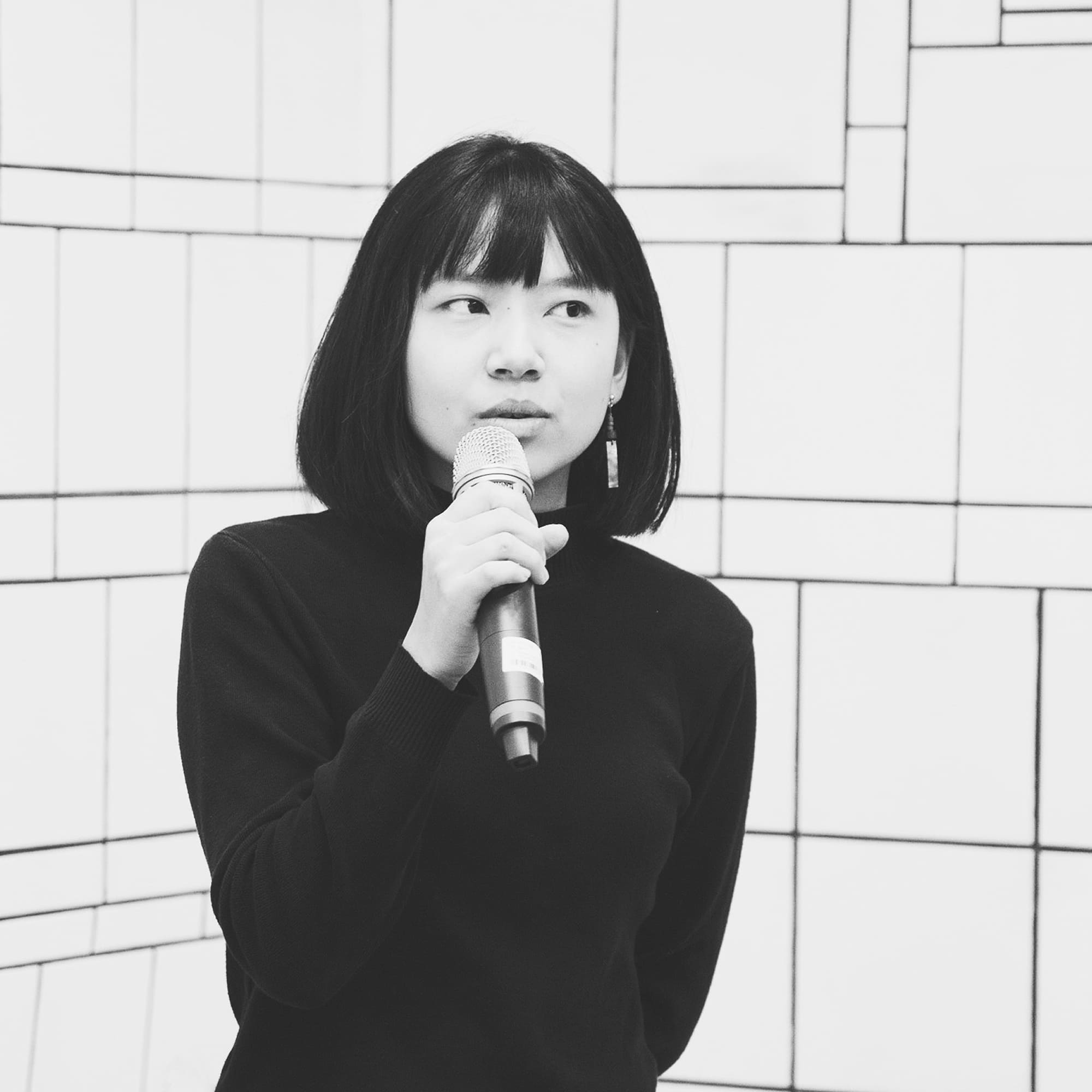
1993年 出生、生活與創作於 臺灣臺北
2020年 畢業於 國立臺北藝術大學美術系 碩士
重要經歷
2025年 榮獲 亞洲文化協會 ACC台灣獎助計畫,臺灣
2025年 聯展《No Language》台北當代藝術館,臺北,臺灣
2023年 駐村 福岡亞洲美術館,作品受該單位典藏
陳為榛,1993年生於台北,目前居住工作於台北,創作以雕塑與裝置為主。
陳為榛從生活中的物質材料作為思考創作的起點,題材多環繞在物質性與其對立的一面,如:以物質具象轉化數位的視覺經驗,並在材料的探索中反芻自我文化的認同。作品透過形式的轉譯與材質的反串,將日常物以不同於日常被規訓的功能被看見,在貫穿作品的反諷性格與自我調侃中,感受對象物與它的反面,是其個人內在的探索過程與精神層面的反思。
自2020年開始舉辦個展包括:「數學.空罐」,絕對空間,台南(2020);「幾何.空罐」,伊通公園,台北(2020);「銀灰塵」,伊日藝術計劃,台北(2021);「夾板」「幾何編碼2023」,伊日後樂園(2023)。多次於台北當代藝術館、國立台灣美術館、高雄市立美術館、花蓮石雕博物館、基隆美術館、關渡美術館等機構展出。也參與藝術博覽會如:台北藝術博覽會(台灣,台北)、首爾雕塑藝術博覽會(韓國,首爾)、雅加達藝術博覽會(印尼,雅加達)、別府藝術博覽會(日本,大分)。曾於福岡亞洲美術館(日本,2023)駐村,作品獲福岡亞洲美術館(日本,2023)、文化部藝術銀行(台灣,2024)典藏。
創作理念
幾何編碼系列以早期台灣開始大量盛行的建材—磁磚,作為主要媒介,重新詮釋機械量產製造下所建造出的家庭室內裝潢及台灣市景的截圖。然而,身處在數位時代中,磁磚這樣大量複製並且具有序列性的特質,在視覺上對我來說是另一種「數位」的感受。
在數位軟體中,複製、貼上、透視、傾斜、重疊以及製作剪裁遮色片等等作為常見的變形、編輯工能,已經可以很容易地被我們所辨識,並且內化成為「數位的視覺經驗」。此系列作將作為物質媒材的磁磚,像是套用了軟體中的變形工具般進行排列與編輯,乍看下就如同電腦繪圖中的圖像。然而,物件上依然能見磁磚釉面的質地與反光、填縫劑本身的孔洞與毛邊,在數位感的造型之下亦同時呈現媒材自身的物質痕跡。
同樣是大量地複製與貼上,磁磚的製作歷經了陶土的成型、燒製、上釉、再燒製,數位圖像只需要在鍵盤上按下ctr+c與ctr+v。我透過「物質」與「數位」兩者本質上具有極大反差的事物,混淆現實場域與虛擬空間的感知,回應身處現實空間卻逐漸被數位化的視覺慣性。
b. 1993. Taipei, Taiwan.
2020 M.F.A., Taipei National University of the Arts.
IMPORTANT EXPERIENCE
2025 Asian Cultural Council (ACC), Taiwan.
2025 No Language, MoCA Taipei, Taipei, Taiwan.
2023 Fukuoka Asian Art Museum, Fukuoka, Japen.
ARTISTS STATEMENT
Chen Wei-Chen. Born in 1993 in Taipei, currently lives and works in Taipei. His practice centers on sculpture and installation.

Chen Wei-Chen takes material substances from everyday life as the starting point of her creative thinking. Her work often revolves around the material and its oppositional aspects—for instance, transforming digital visual experiences into tangible physical forms, while reflecting on her own cultural identity through explorations of materiality. By translating form and cross-dressing material functions, she reveals familiar objects through unfamiliar perspectives, subverting their socially conditioned utility. Underpinning her works is a tone of irony and self-mockery, creating a field where the object and its opposite co-exist, embodying an inward journey and a reflection on the spiritual dimension.

Since 2020, Chen has held solo exhibitions including: Math・Empty Cans, Absolute Space for the Arts, Tainan (2020); Geometry・Empty Cans, IT Park, Taipei (2020); Silver Dust, YIRI Arts Project, Taipei (2021); Plywood and Geometric Coding 2023, YIRI BACK_Y (2023). Her works have been exhibited in institutions such as the Museum of Contemporary Art Taipei, National Taiwan Museum of Fine Arts, Kaohsiung Museum of Fine Arts, Hualien Stone Sculpture Museum, Keelung Art Museum, and Kuandu Museum of Fine Arts. She has also participated in art fairs including Art Taipei (Taiwan), Seoul Sculpture Art Fair (Korea), Art Jakarta (Indonesia), and Beppu Art Fair (Japan). In 2023, she undertook a residency at Fukuoka Asian Art Museum (Japan). Her works are also part of the collections of the Fukuoka Asian Art Museum (2023) and Art Bank Taiwan (2024).
CREATIVE CONCEPT
The Geometric Encoding series takes tiles—once a widely popular building material in Taiwan—as its primary medium to reinterpret mass-produced interior decoration and snapshots of Taiwan’s urban landscape. Yet, living in the digital age, the tile’s characteristics of mass replication and seriality evoke, for me, a distinctively “digital” sensibility in their visual language.

In digital software, operations like copy-paste, perspective distortion, skew, layering, and clipping masks have become commonplace tools of transformation and editing—familiar visual behaviors we now instinctively recognize as part of the “digital visual experience.” In this series, I treat the tile—an inherently physical and material object—as though it were subjected to the same manipulations found in software interfaces, arranging and editing it in ways that mimic digital image construction. At first glance, the objects appear to resemble computer-rendered graphics; yet upon closer inspection, the tangible traces of their materiality persist—the glaze of ceramic surfaces, the porosity and frayed edges of grout—all remain legible beneath the digitally-inflected forms.

Though both tile and pixel may be reproduced and copied en masse, the tile’s journey involves a tactile process: molding clay, firing, glazing, and firing again. In contrast, digital imagery emerges with a simple press of ctrl+c and ctrl+v. By juxtaposing the materially grounded with the virtually instant, I blur the boundary between physical and simulated perception—responding to the gradual digitization of how we see and navigate the real world.
