Text / CHEN Yi-Ju
English Translation / RYE LIN ART & TRANSLATION
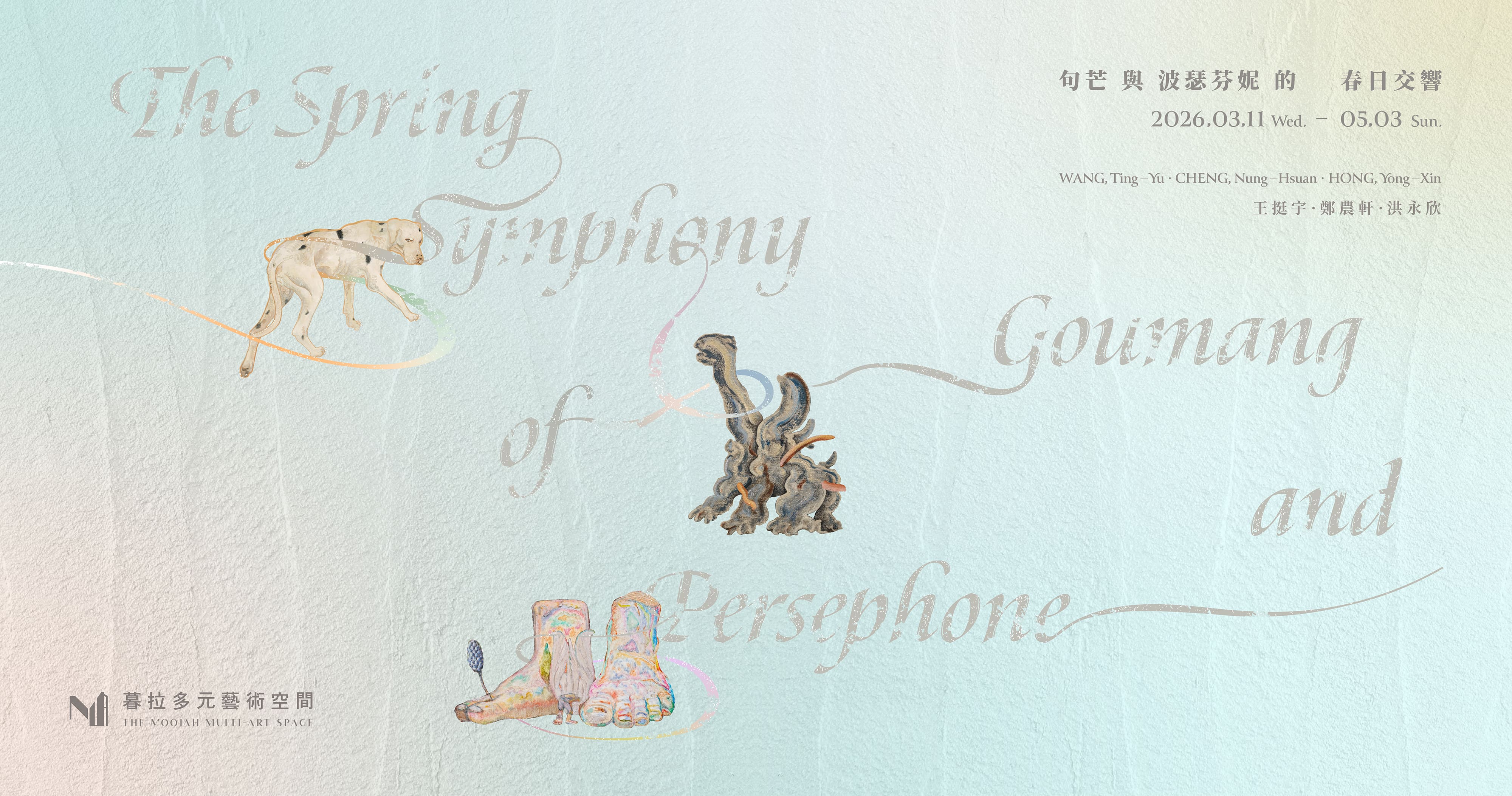
Time turns, and mid-spring arrives. The earth becomes a vast musical score, upon which Gou-mang1 plays with his verdant talons the strings of the forests, prompting woods and grass to sprout, while Persephone2 emerges from the stillness of the underworld, dispelling barrenness with her joyful humming. The overture resounds.

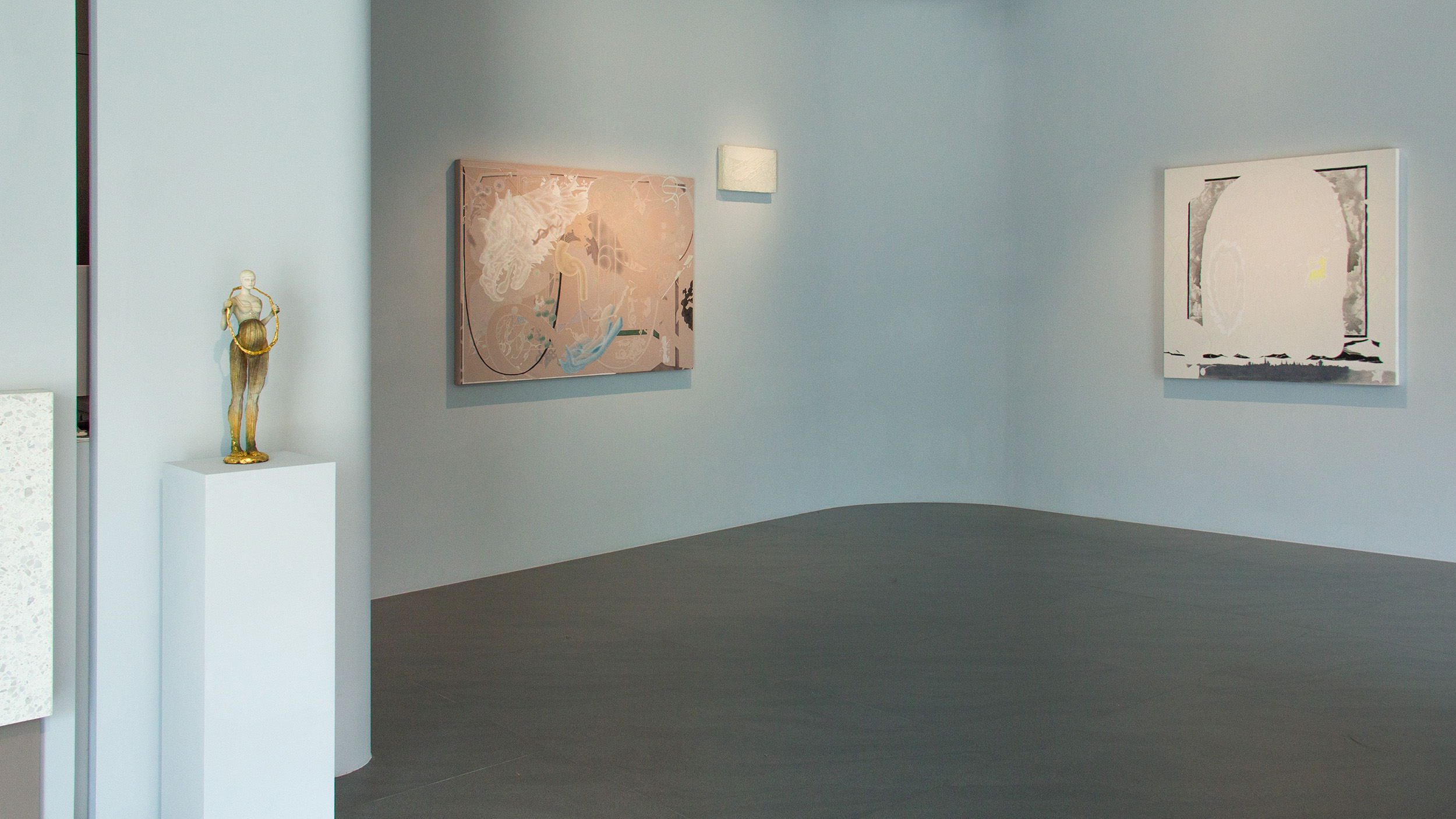
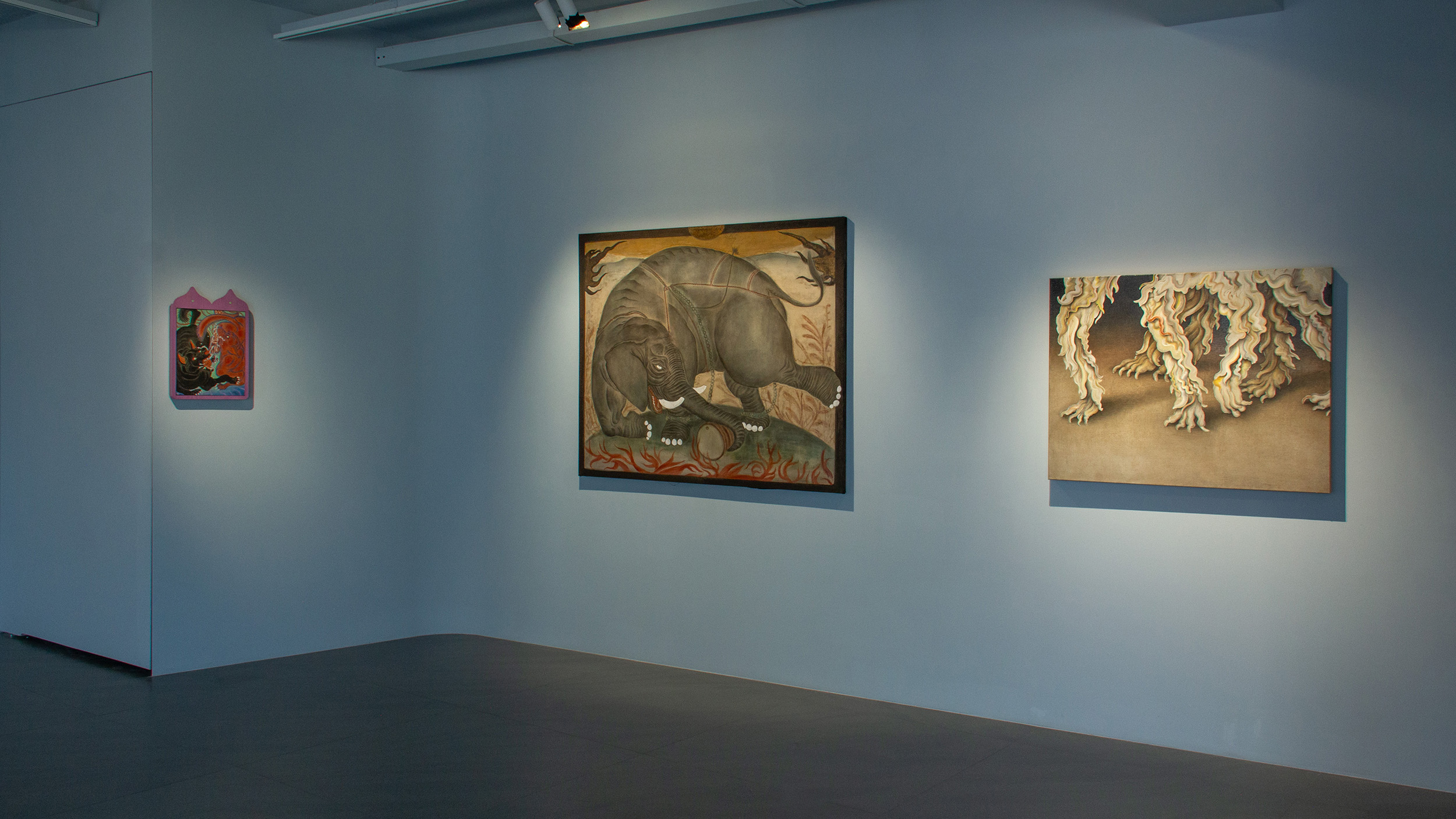
Spring, at its core, is a symphony for eye and ear alike. In this exhibition, spring deities take on the role of conductors, orchestrating perceptual encounters that transcend and distil elements from both Eastern and Western cultures. As all living things revive, three artists – WANG Ting-Yu, CHENG Nung-Hsuan, and HONG Yong-Xin – come together to play out in the rhythm through their distinct artistic languages.
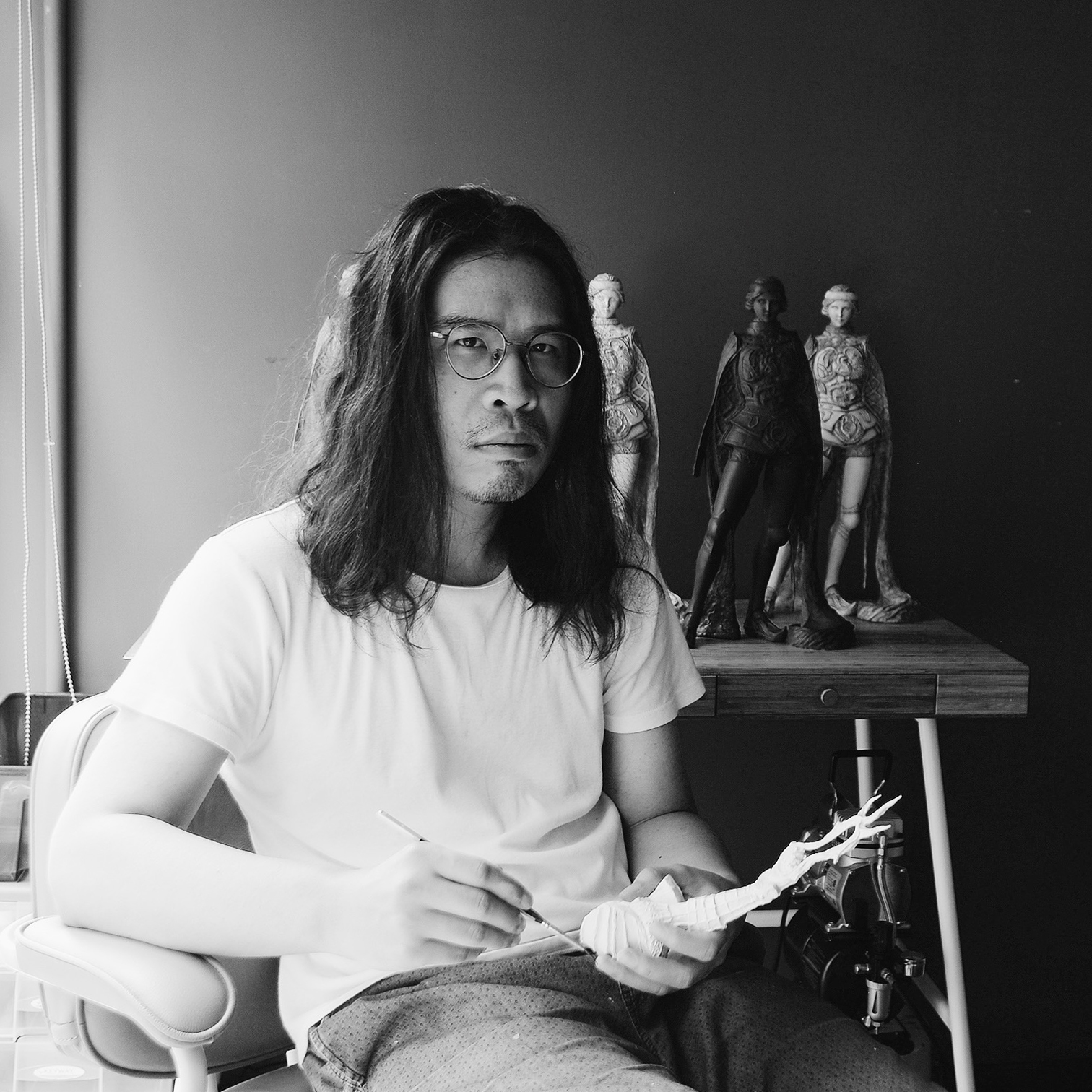
WANG Ting-Yu: A Polyphony of Astrology and Chorography
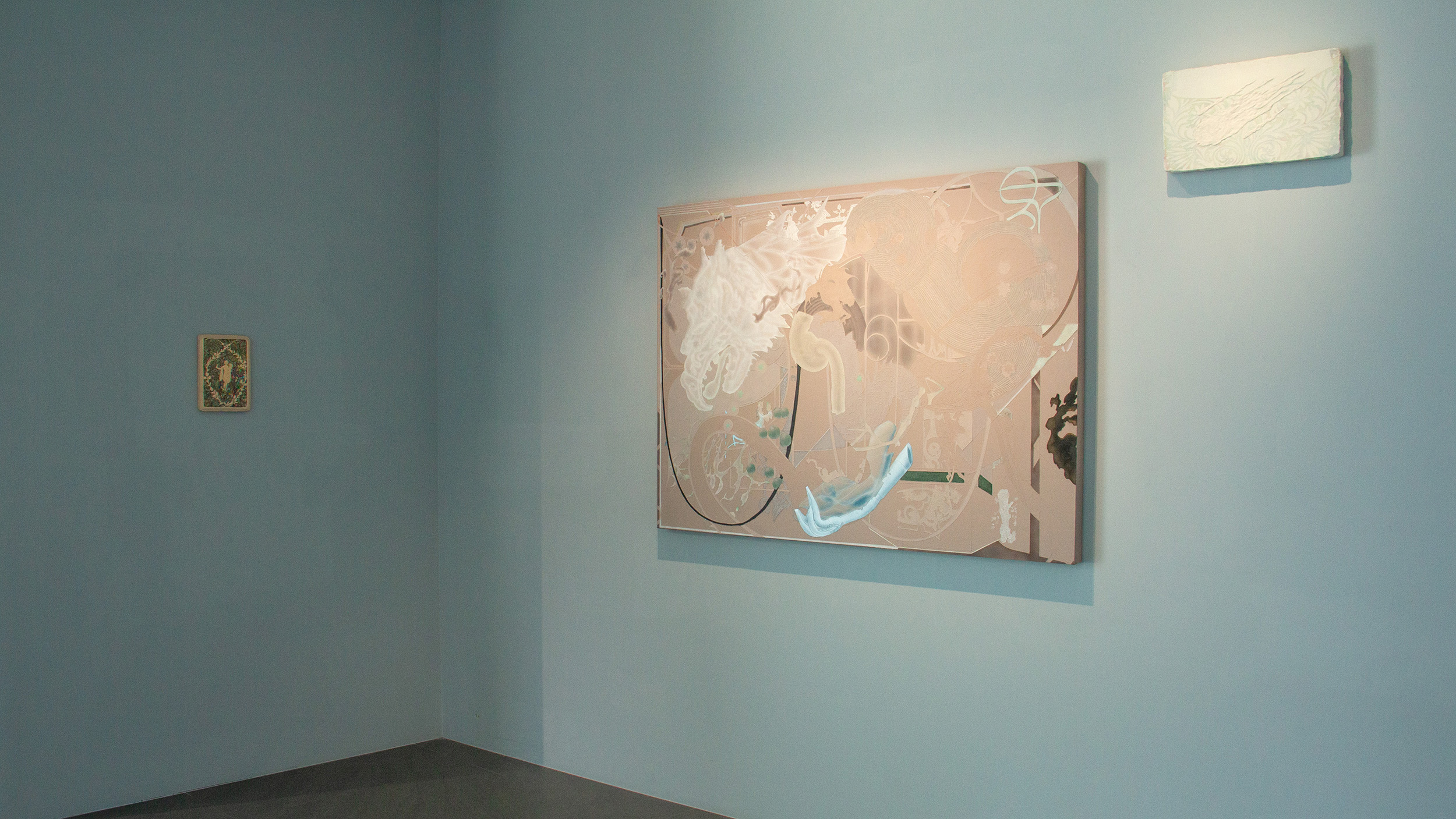
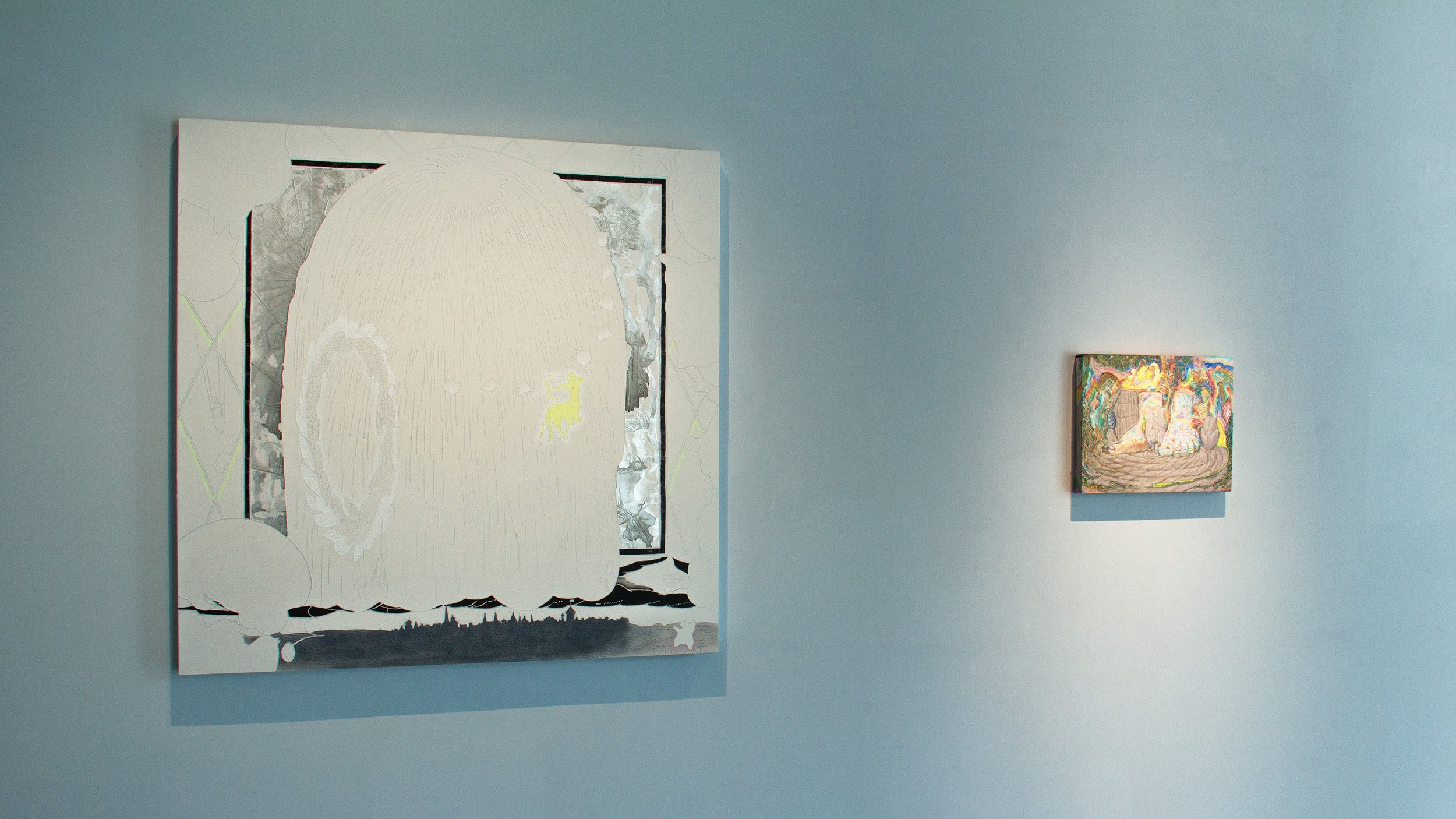
After the thunder of spring, a fine mist of rain descends. A centaur, drawing a powerful bow towards the pale heads of fallen blossom, is rendered as the constellation Corona Australis in the night sky. As time unfolds, the two independent strands of mythological astrology and chorography blend in harmony in Wang’s composition, forming counterpoints within a polyphonic structure.

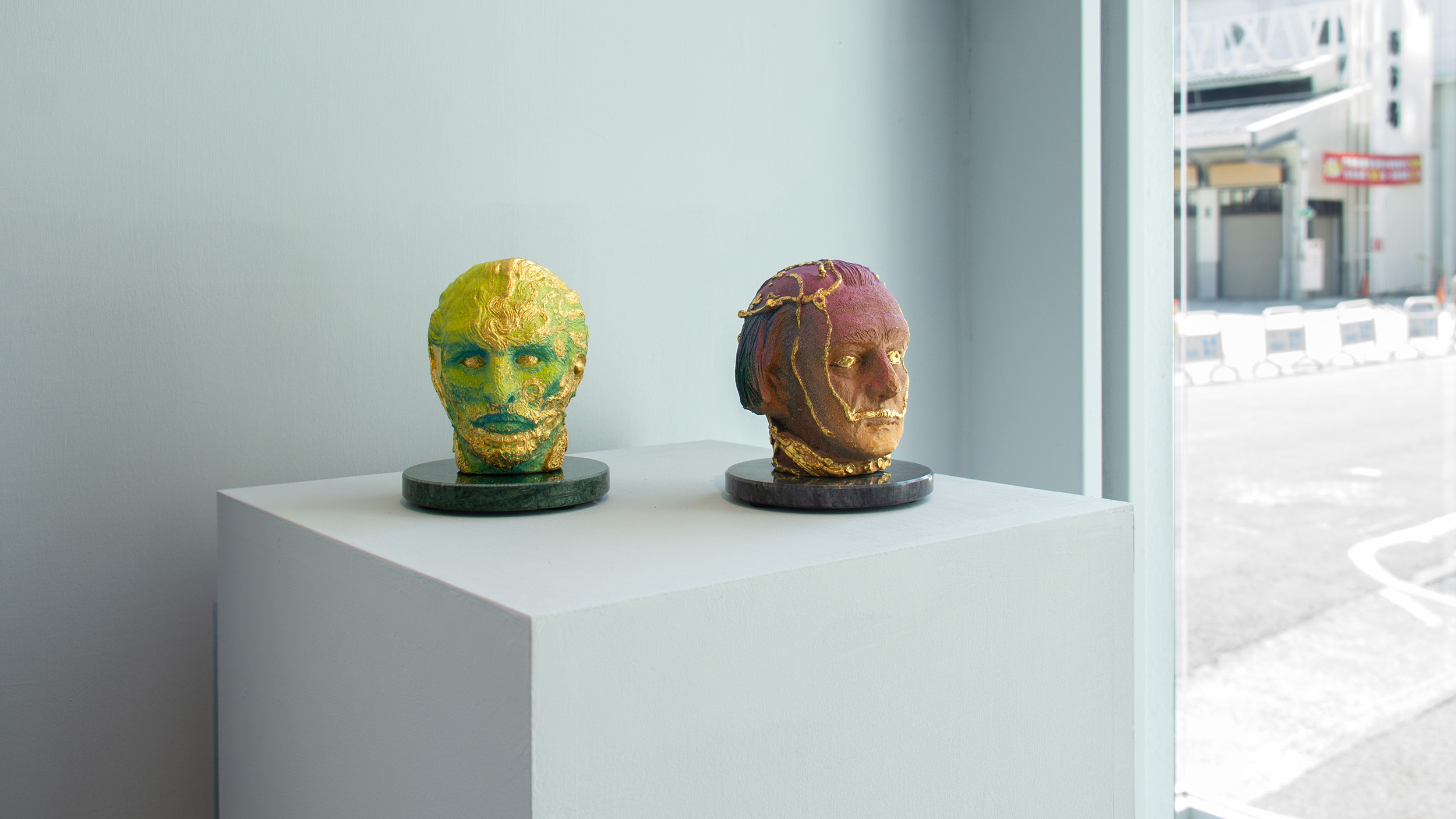
Wang has long been obsessed with totems of ancient civilisations, Greek mythology, and astrological lore. Adopting an archaeologist’s view, he intricately embeds fragments of these symbolic histories onto the canvas, as if surveying and mapping a form of spatio-temporal cartography. Yet before maps function as instrument of navigation, they were projections of explorers’ imagination of lands yet to be reached. Such mappings, interweaving the virtual and the physical, conveys not just the knowledge of their eras but also how they become a visual medium through which humans gradually acquaint with and build the world.

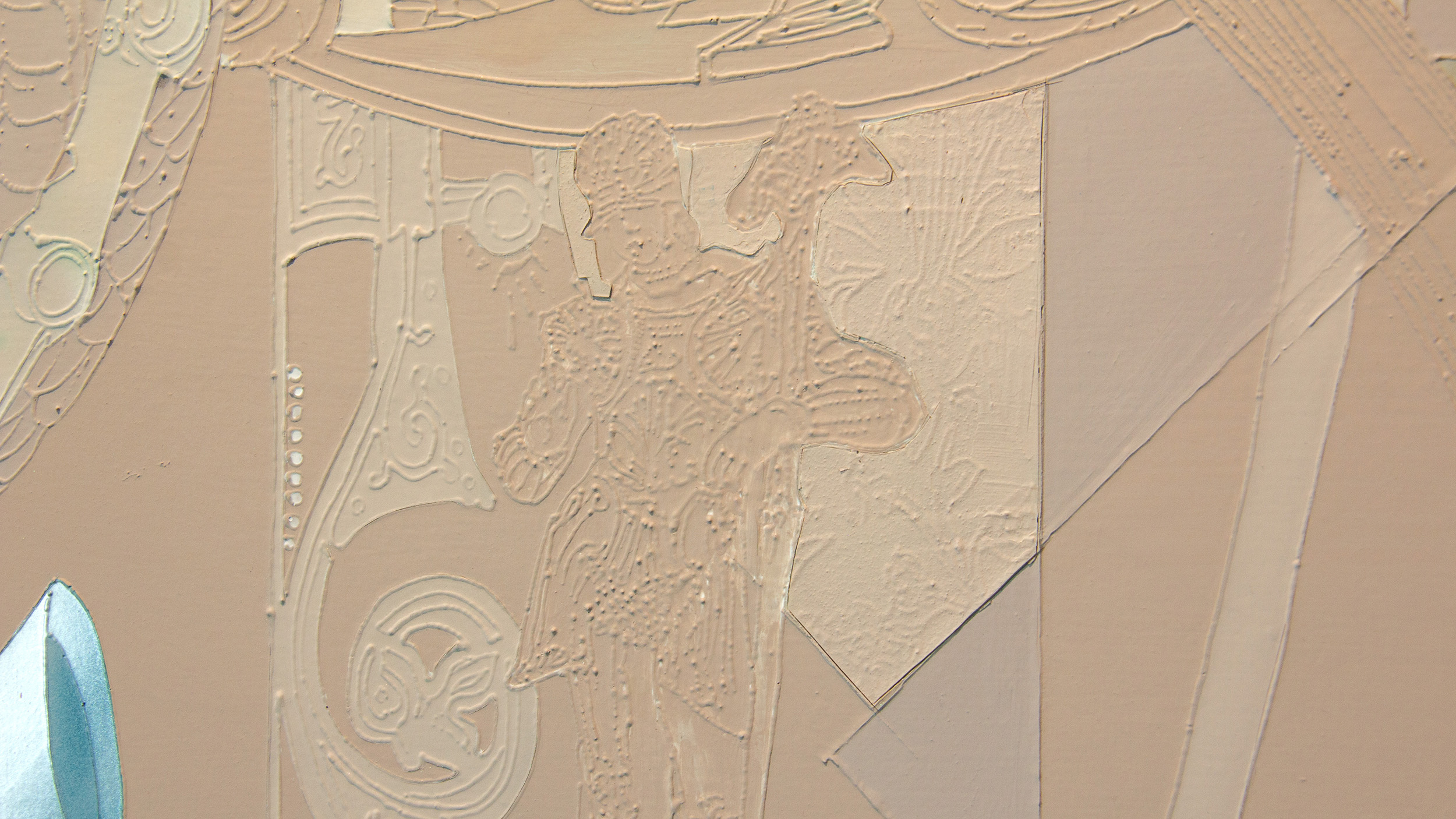
Wang describes his practice as ‘documentation-based’, which are, typically, calm, empirical, and analytical – seemingly forming a sharp contrast to mythical, esoteric beliefs. However, his practice is indeed documentary in nature – he gathers a vast array of images from online databases, deconstructs them, and recomposes them into new configurations. Upon areas of canvas deliberately left blank, he layers acrylic and sprayed paint, at times incising, carving, and polishing the surface. Using a syringe rather than a brush, he meticulously builds up linear forms akin to relief. These lines evoke the traces left in the act of measuring the world, transforming what might appear as a cold atlas into a poetic epic.

A white comet, drawn by gravity, traverses across light years, awaiting an endless collision. As we lift our gaze to the sky, we recall the notion that ‘the world, when expanded through aesthetic perception, becomes the Cosmos.’3 Through the artist’s reconstruction, such a world unfolds across civilisation and the earth alike, offering a luminous field of imagination.
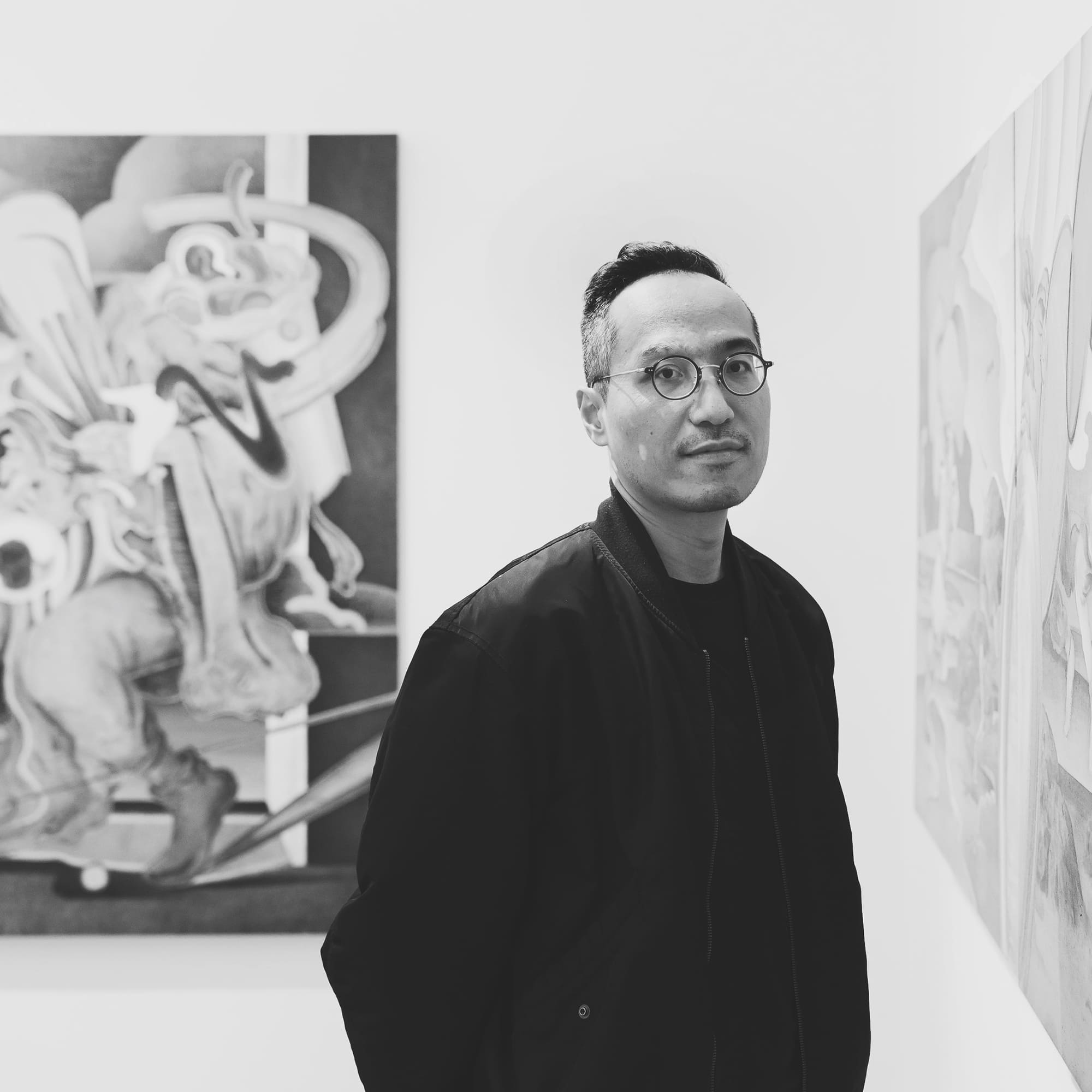
CHENG Nung-Hsuan: Rondos and Undercurrents of the Narratives
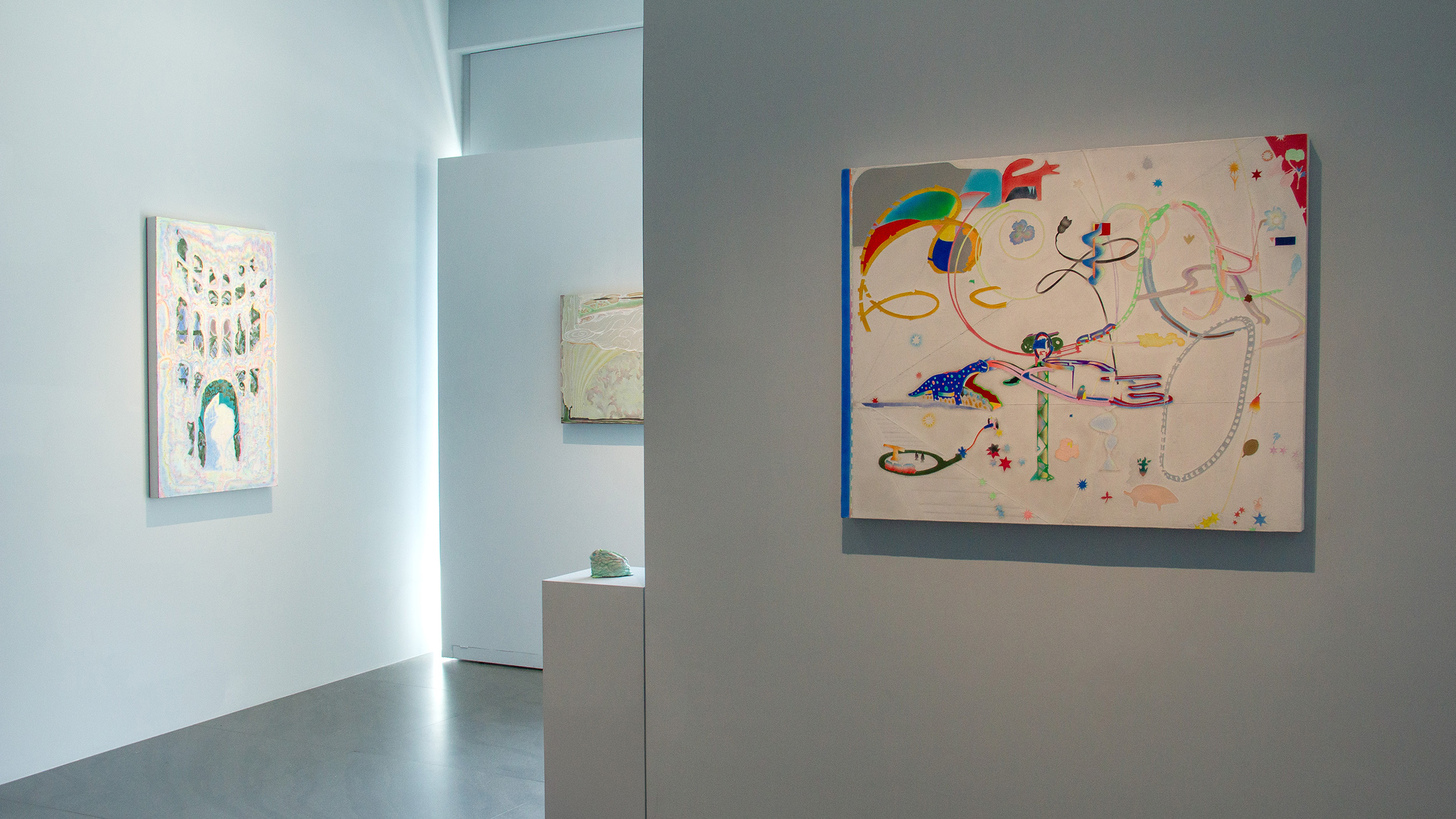
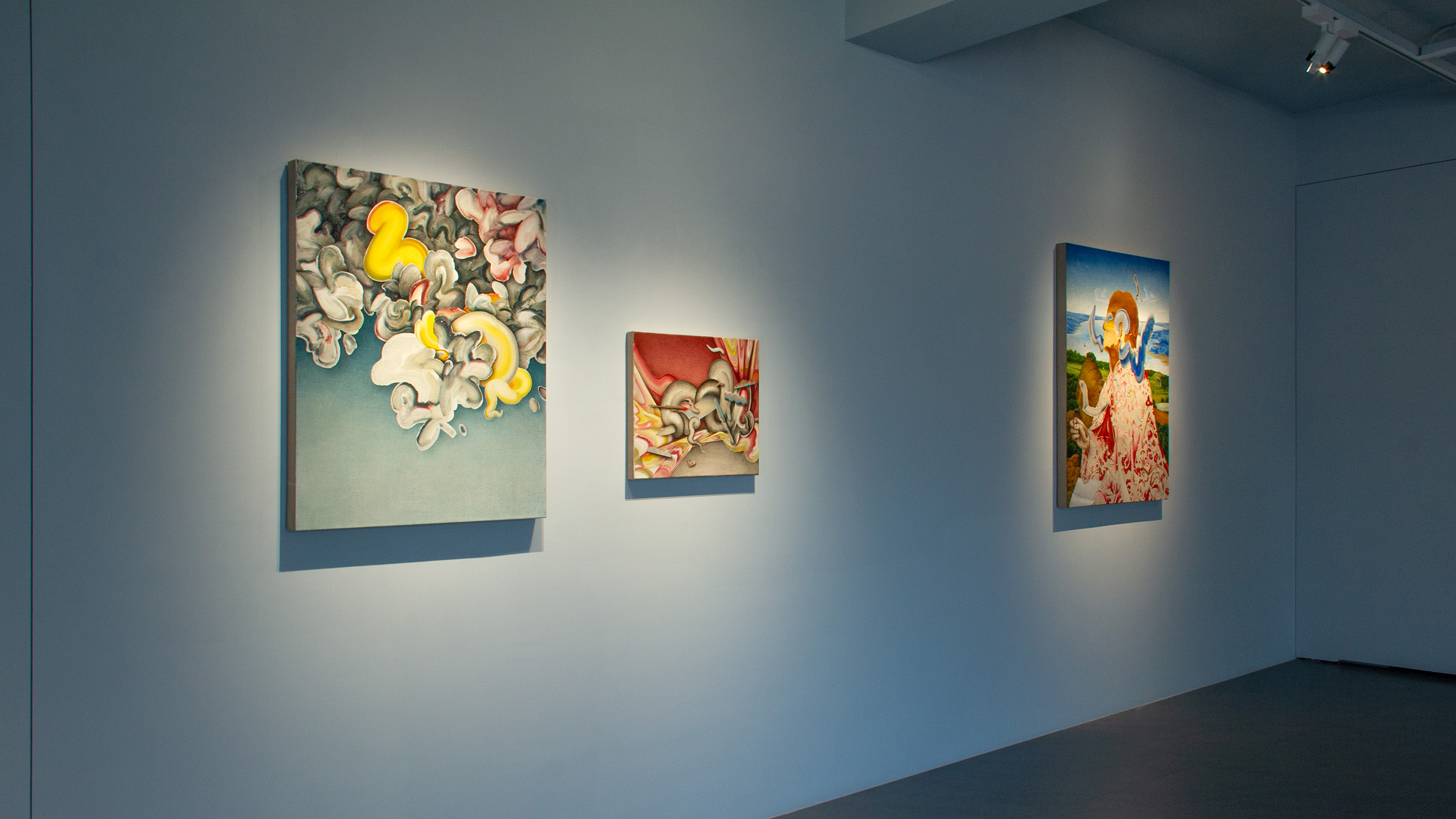
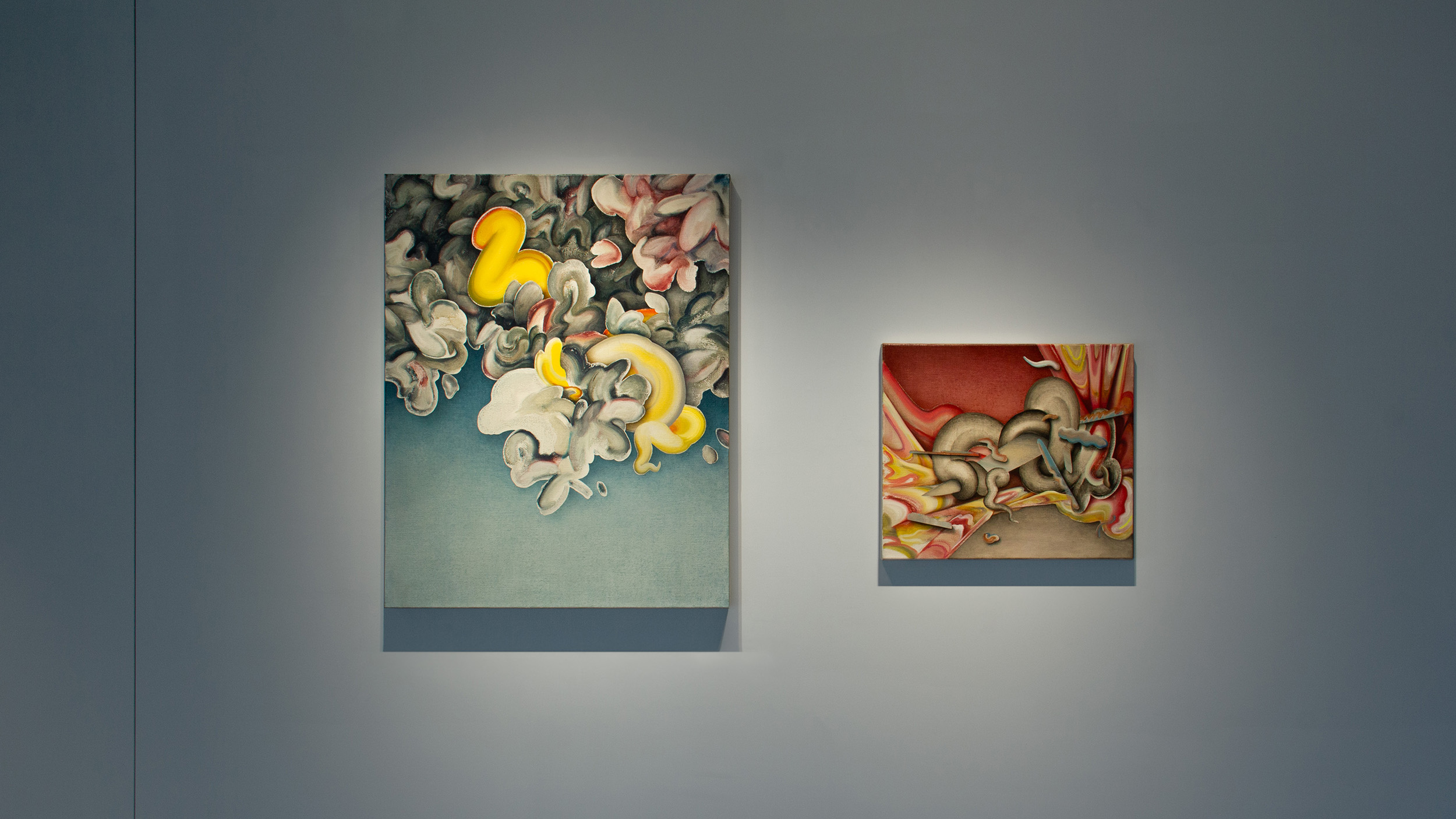
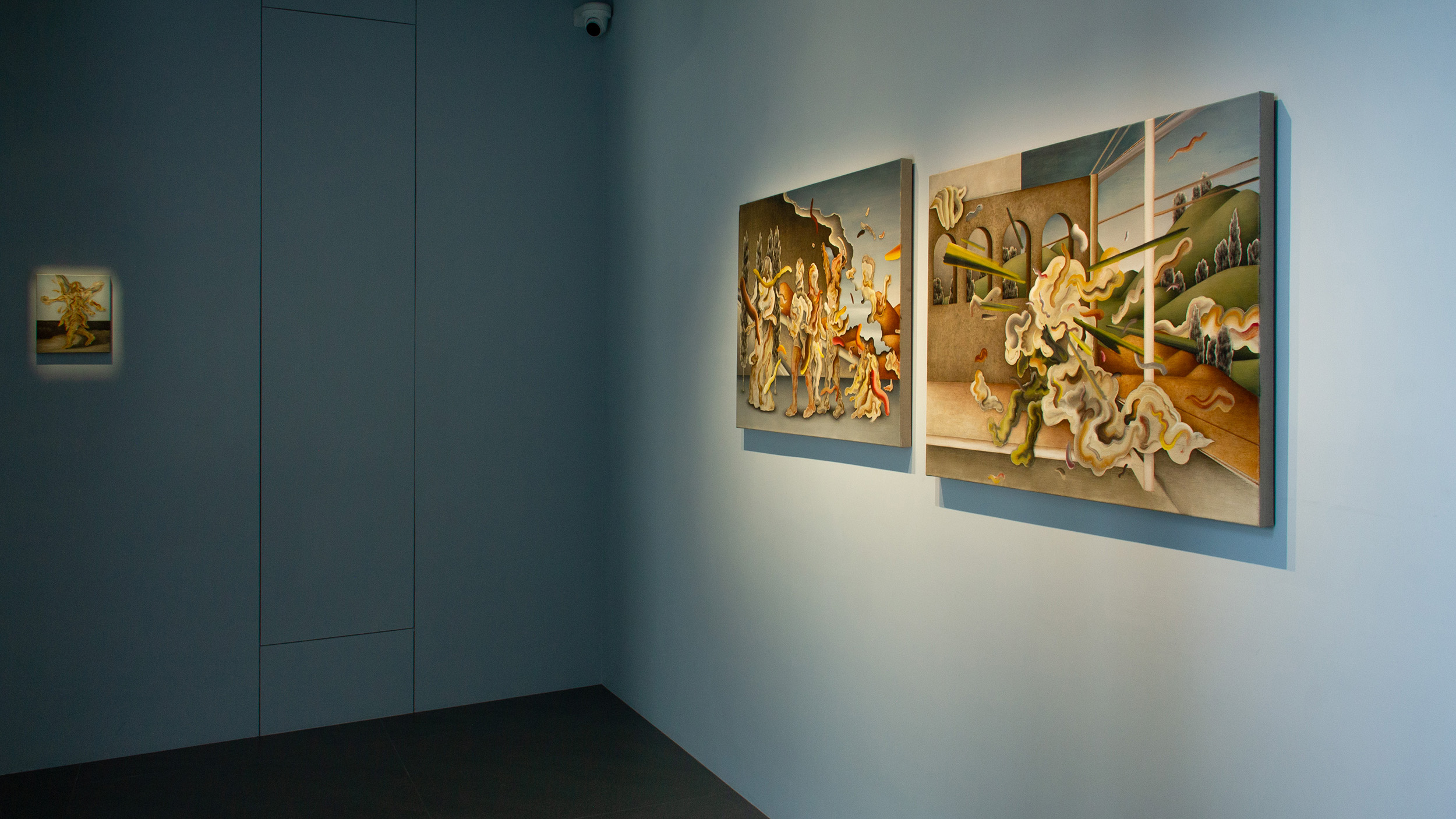
Bismuth vanadate yellow emerges in the instant when sunlight falls upon foliage. These flowing and shifting colour blocks become the most extemporaneous improvisions within this symphony, as if a magnificent vertigo was unveiled when the smoke and mist are swept aside.

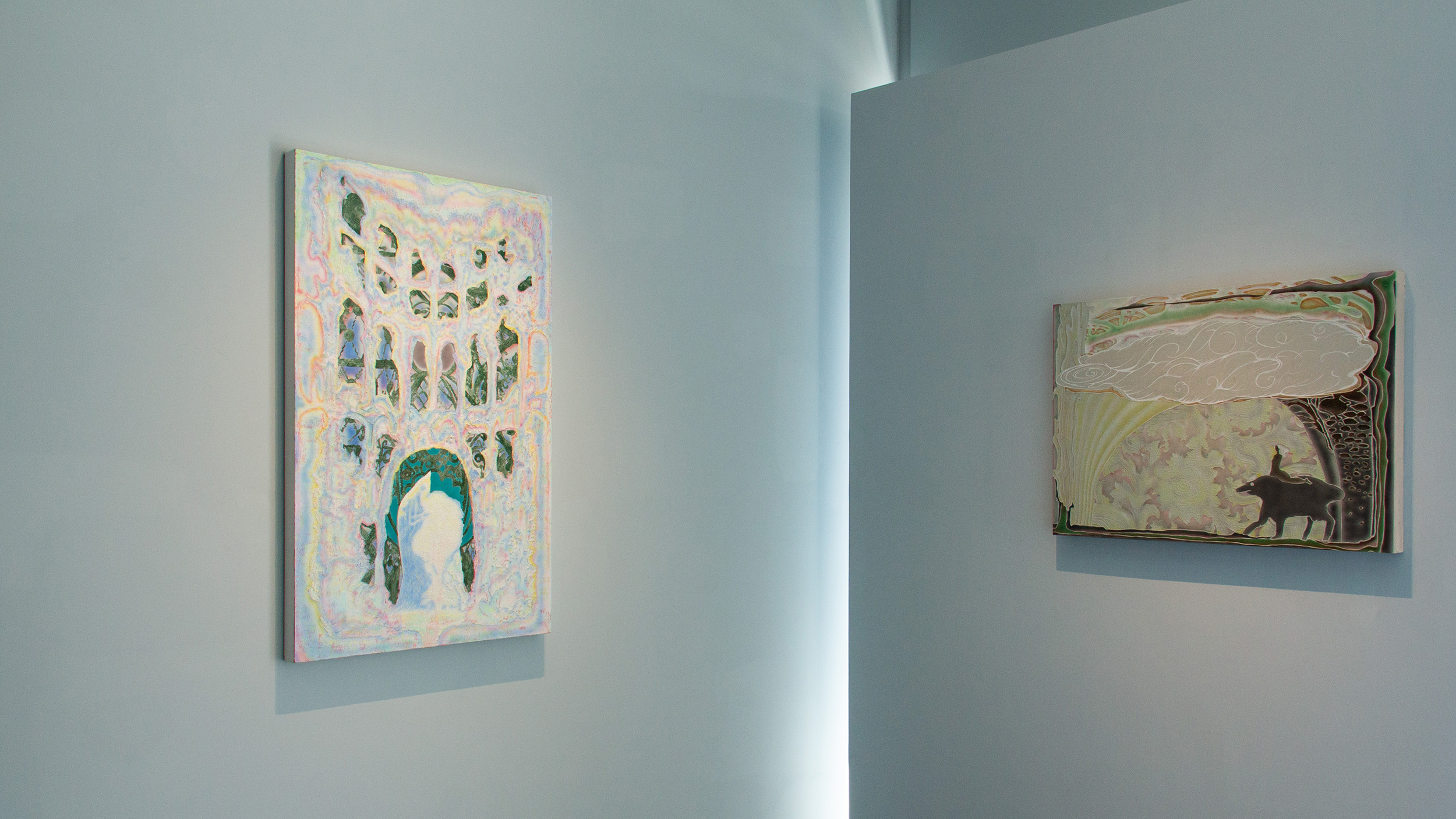
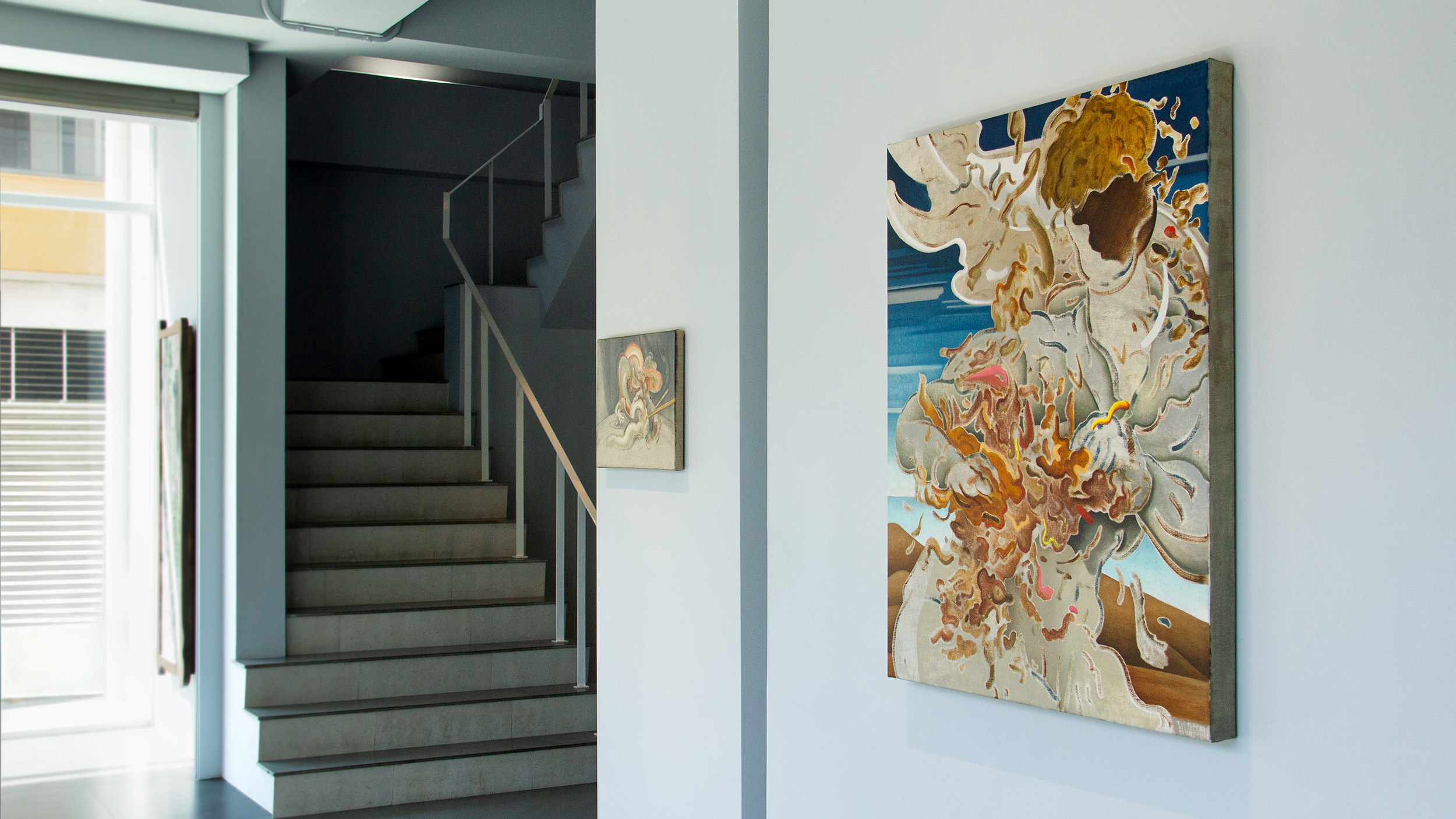
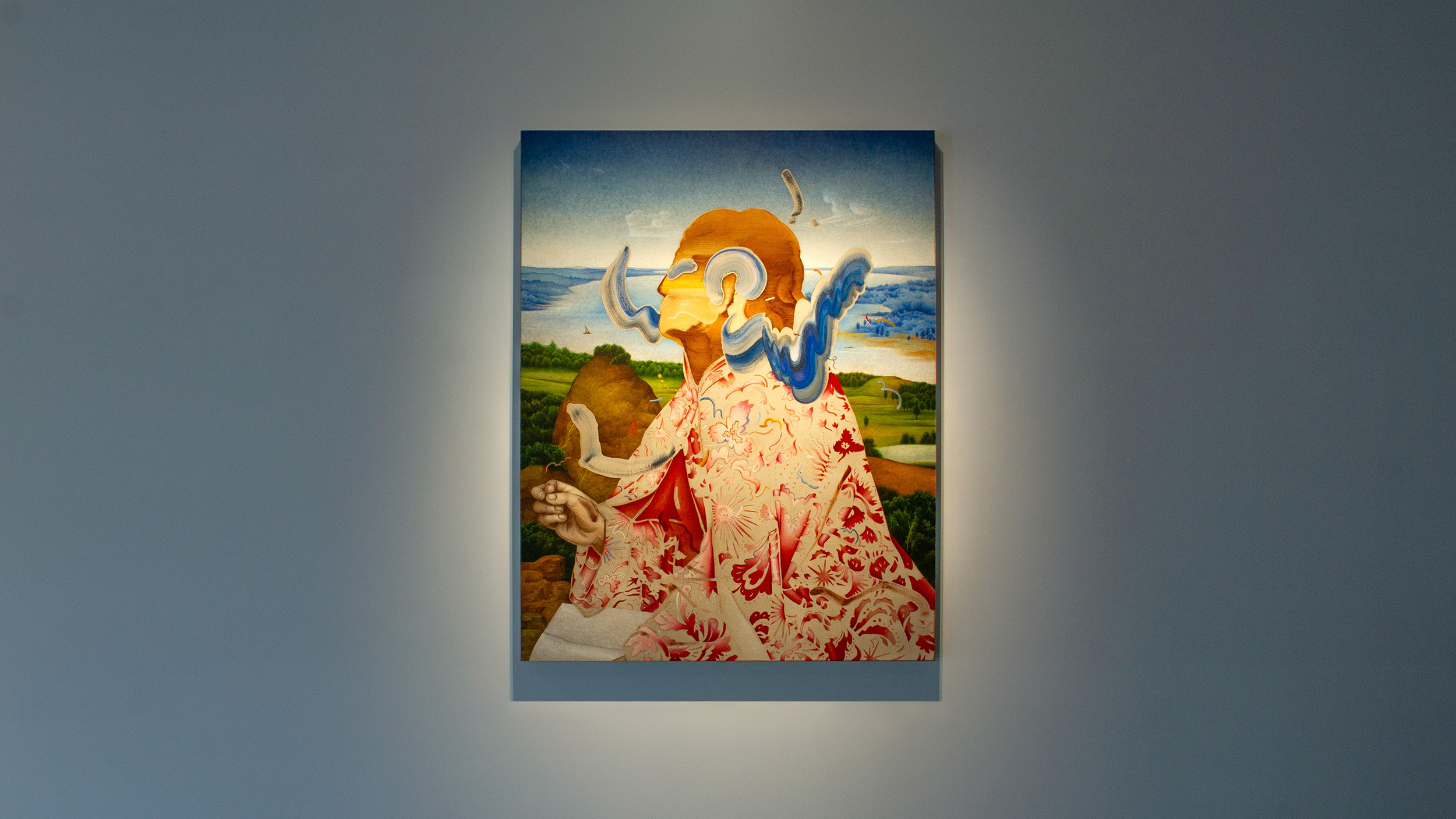
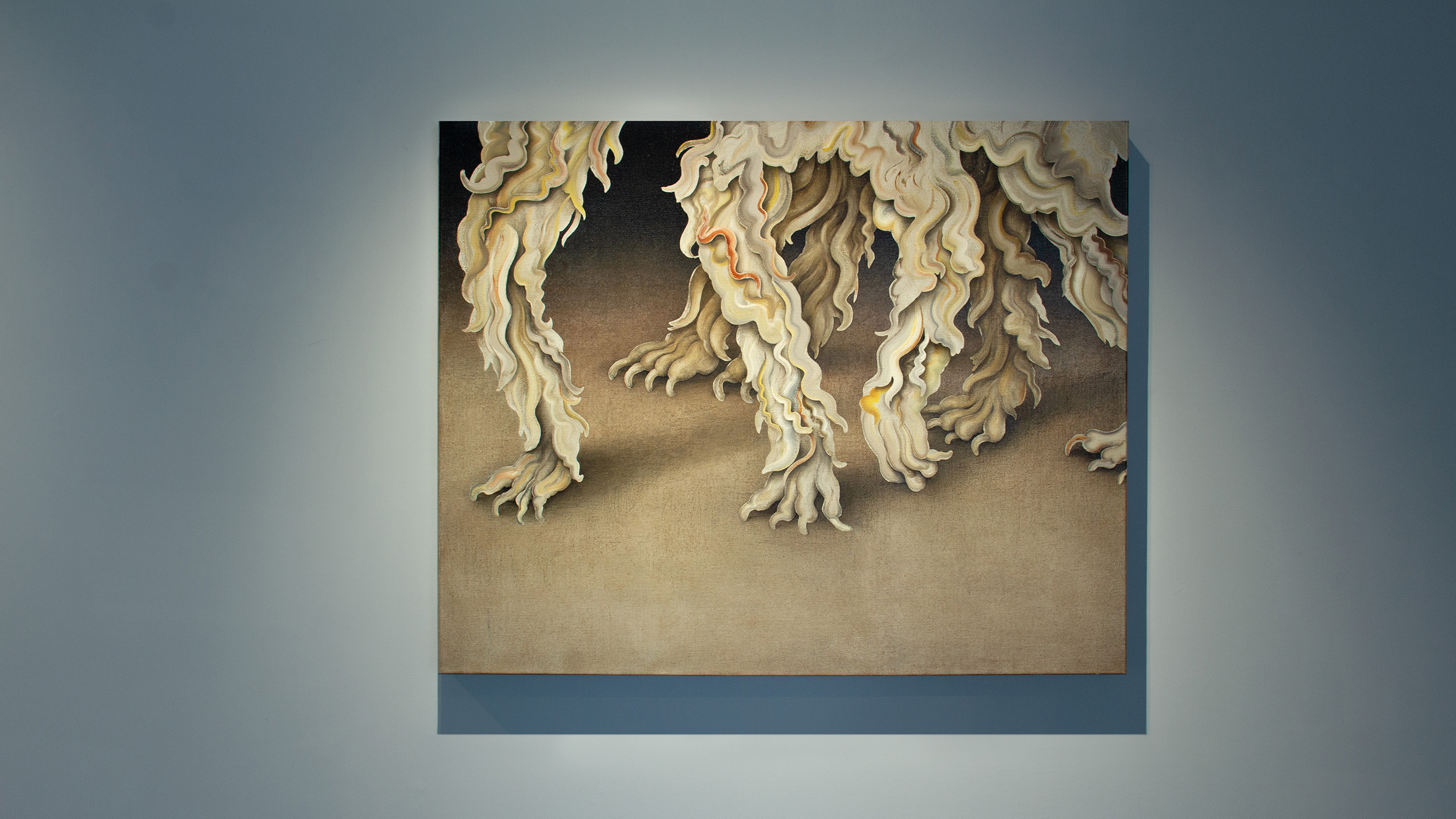
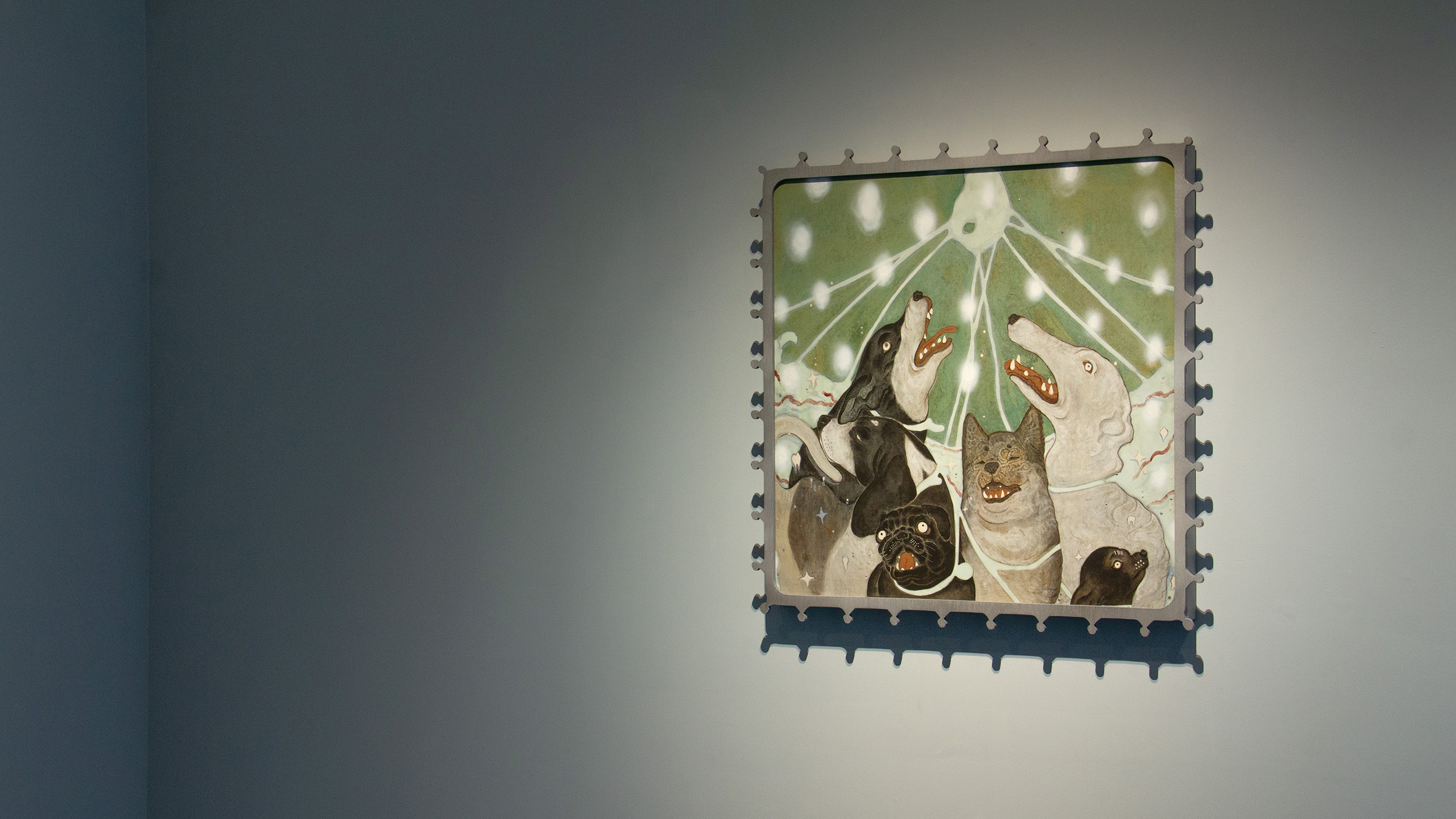
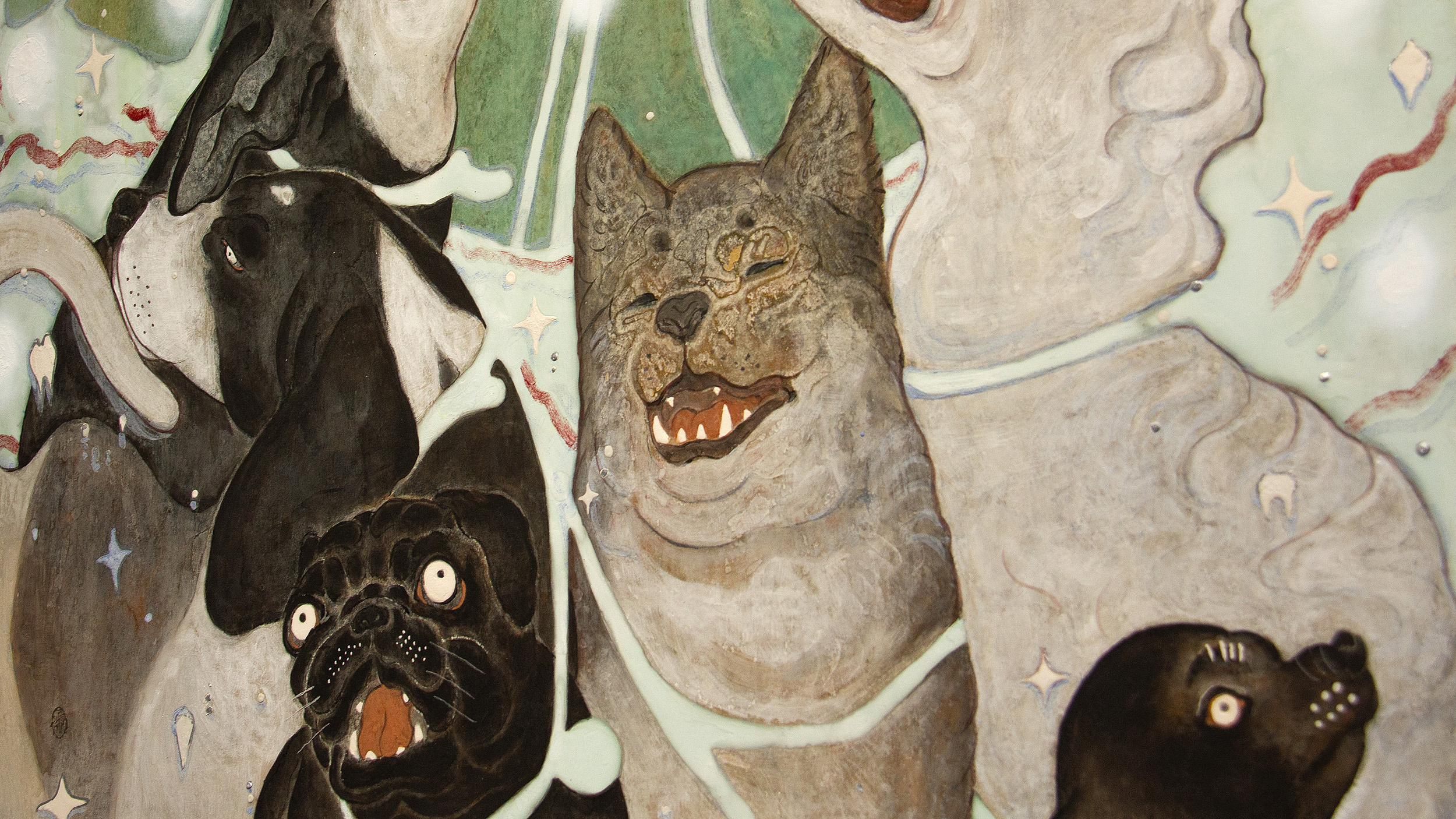
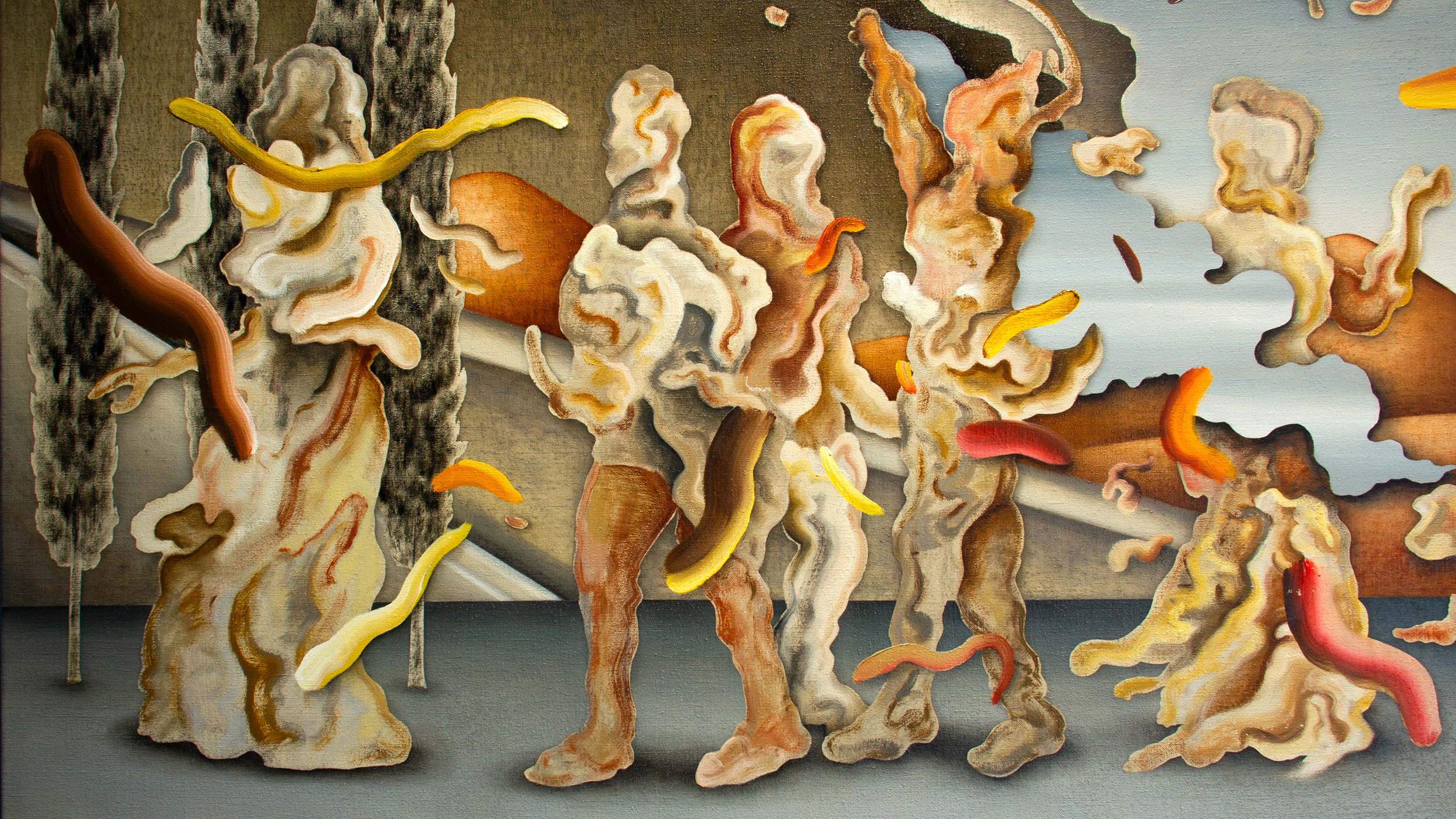
Grounded in the compositional principles of Western classical painting, Cheng infuses his works with a distinctly contemporary visual language through layered applications of oil paint. He studies a wide range of portraits and historical works from the Renaissance; however, rather than seeking to ‘represent nature’ or to follow the grand dialectics of rupture and progression in Western art history, he turns instead towards the extension of personal sensibility. His brushworks convey sharp dynamism; pauses, turns, and dry strokes seem to integrate an Eastern sensibility into the medium of oil painting. The rhythm of the work moves between vigorous allegro, silence, and walking andante.

Walls and woods appear like flattened theatrical sets, while shadows remind us what we see is no longer reality but a constructed depth. By deliberately avoiding explicit narrative, Cheng concentrates instead on cultivating an atmosphere conducive to storytelling. Monsters crouching in the darkness suggest a latent unrest on the verge of eruption – a consciousness deeply embedded within the artist’s psyche. Semi-abstract organisms, inspired by medieval prints, introduce a subtle note of suspense into the composition.

Faceless messengers evoke the figure of Hermès as articulated by Michel Serres. Here, however, Hermès is no longer simply an emissary dispatched at the behest of the gods, but an intermediary traversing space and time. Parched brushstrokes sweep across the canvas, recalling residual traces left in the wake of his passage. They proliferate and unfold within the fissures of order, merging into the ambient resonance of the world as a whole.4
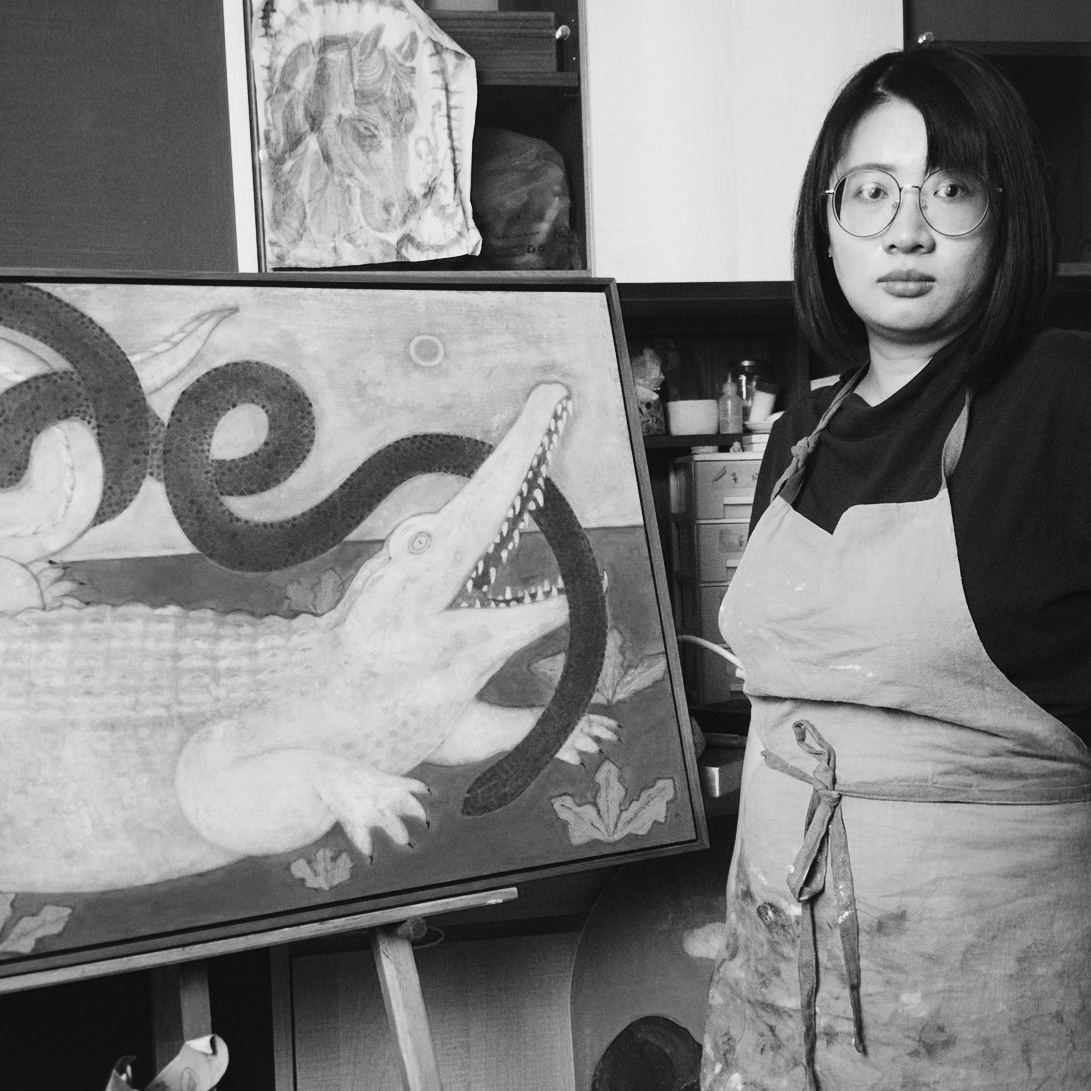
HONG Yong-Xin: A Murmured Rondo of Fable Animals
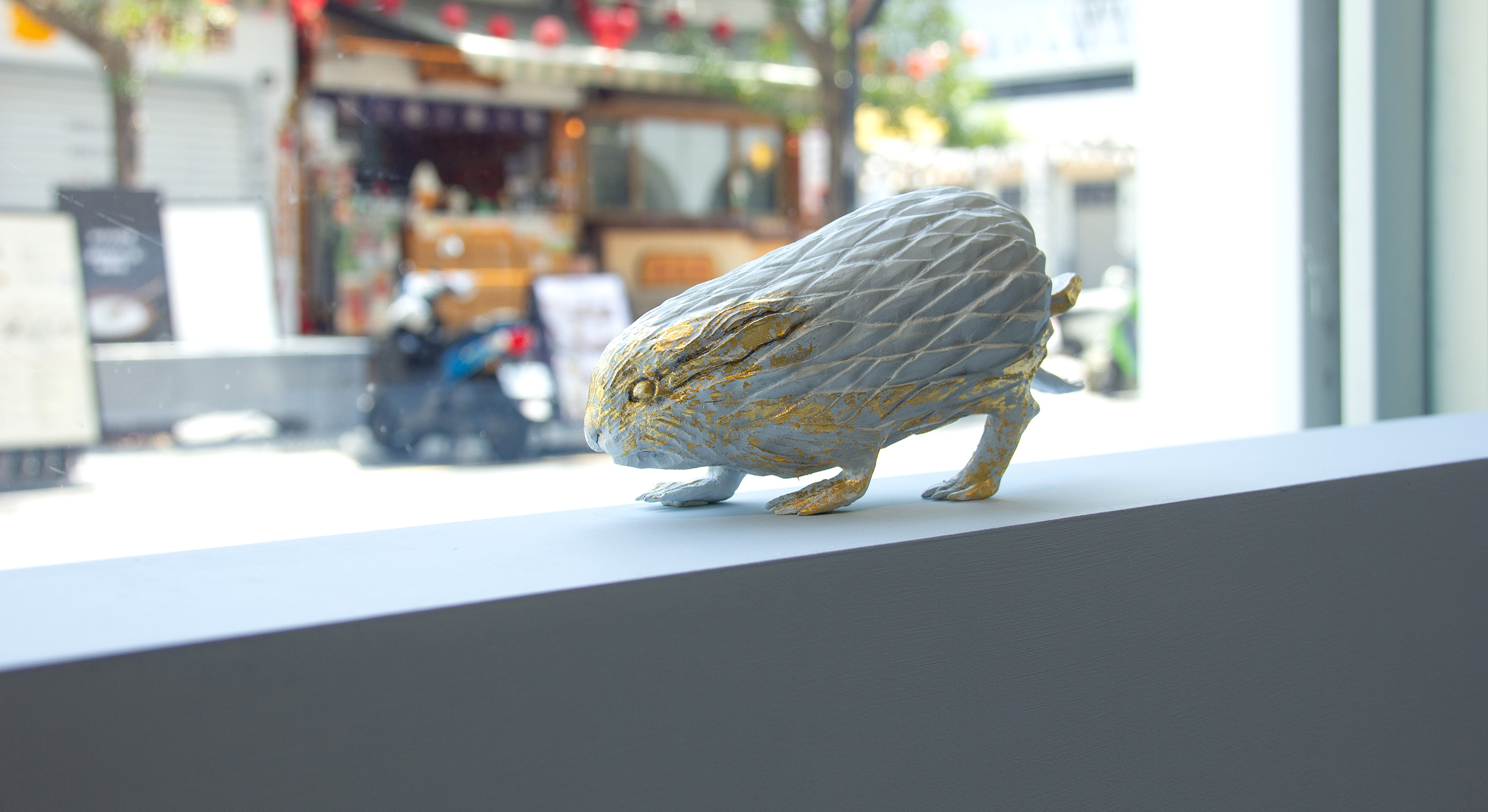
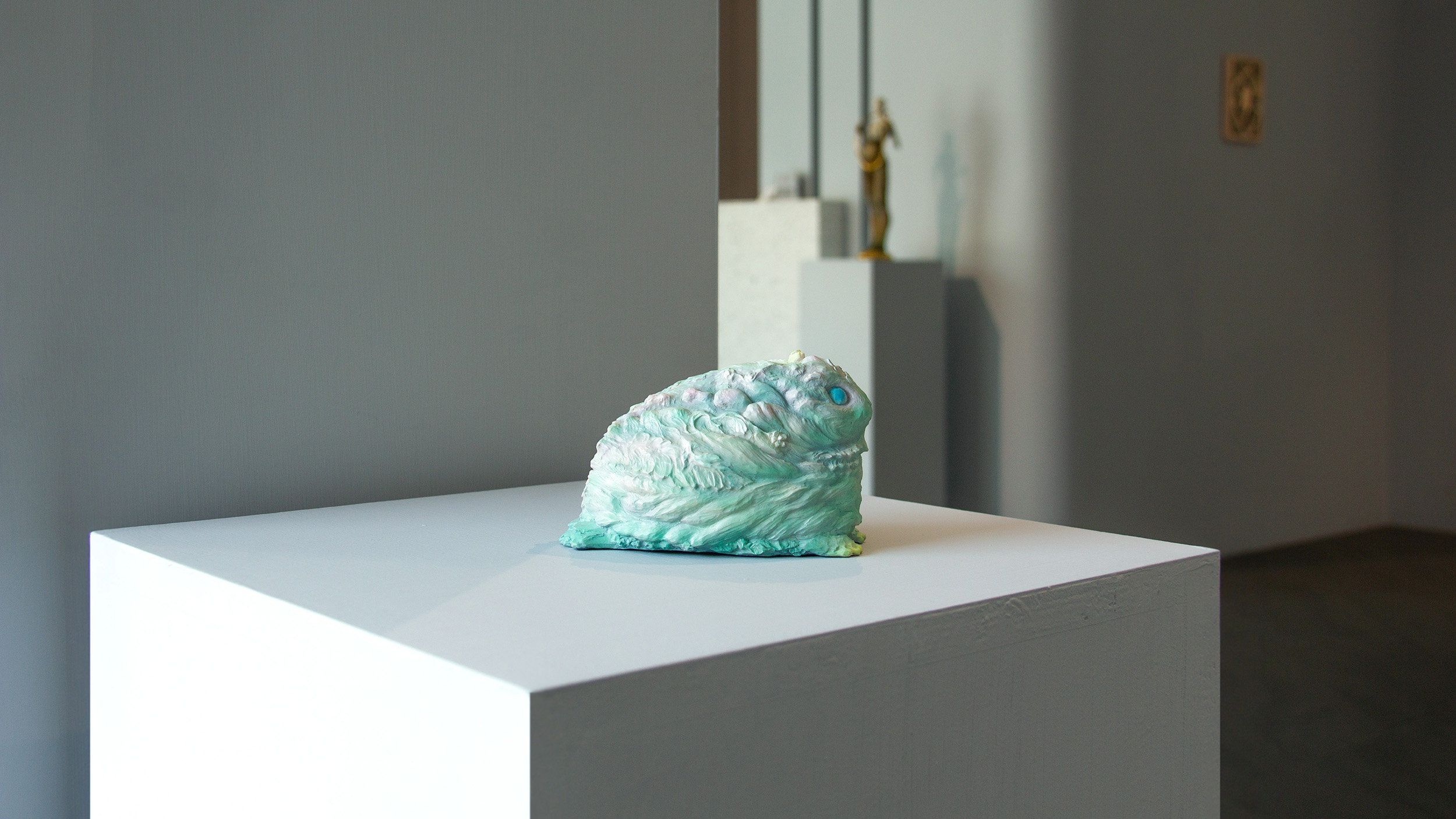
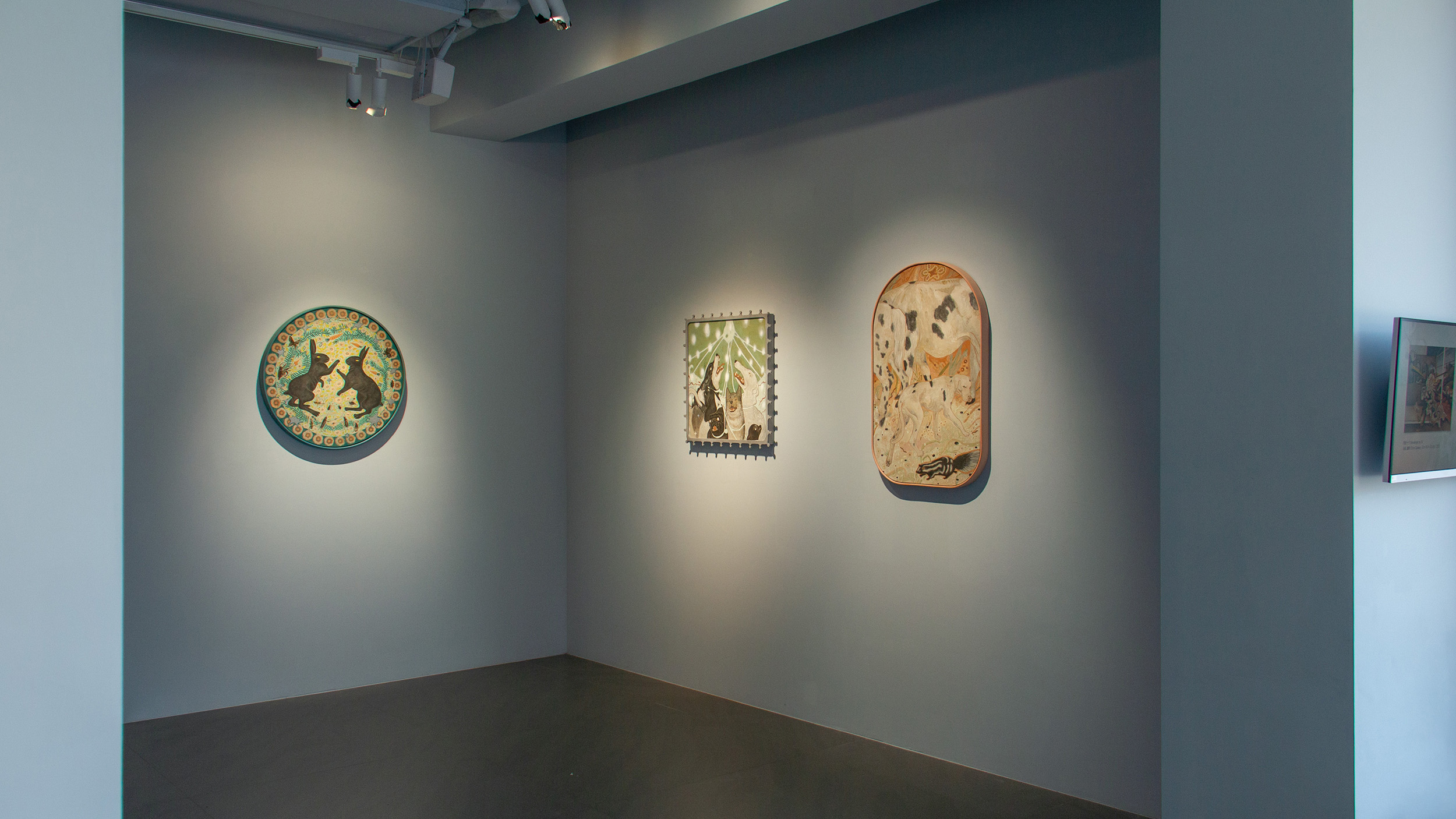
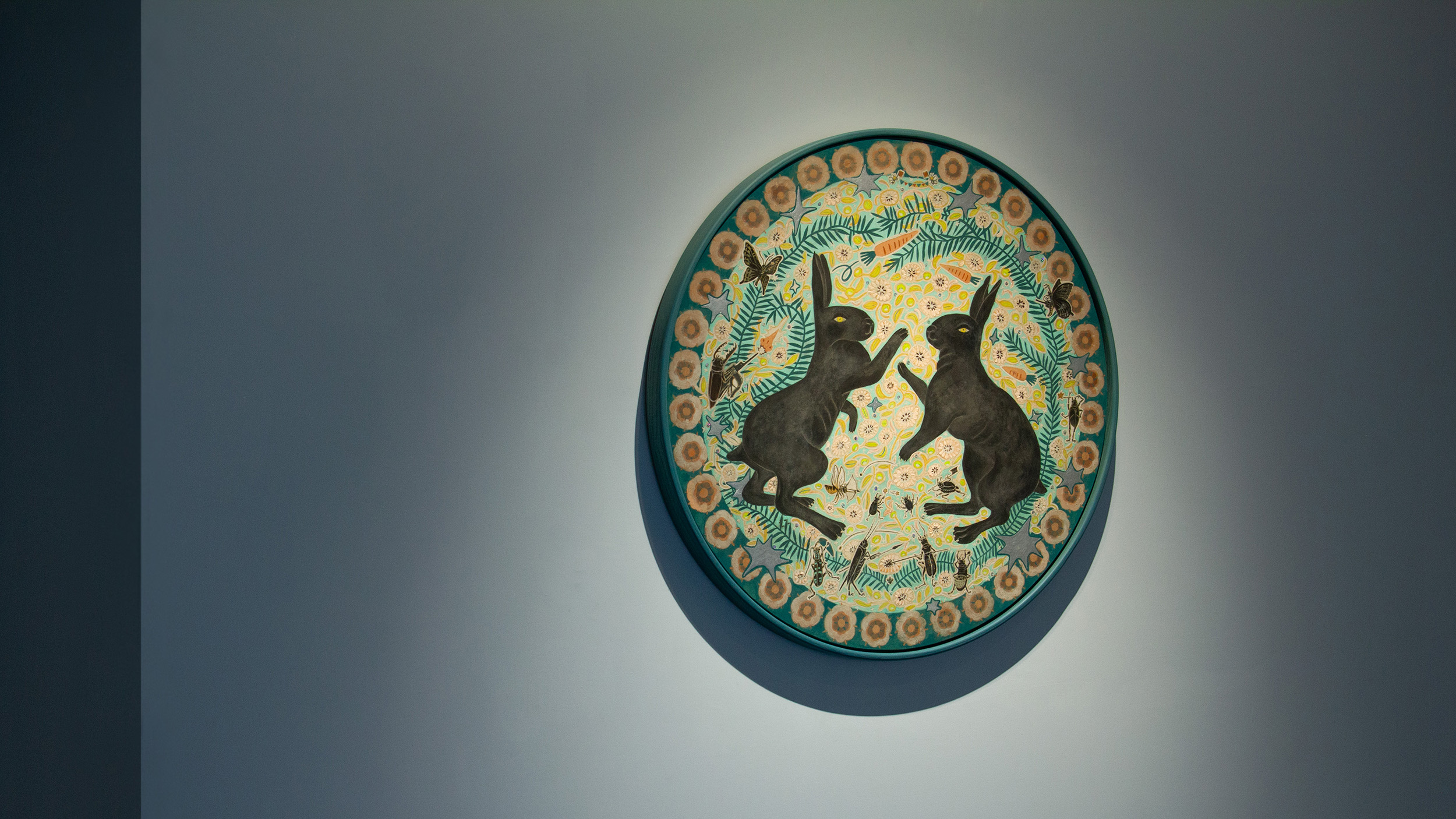
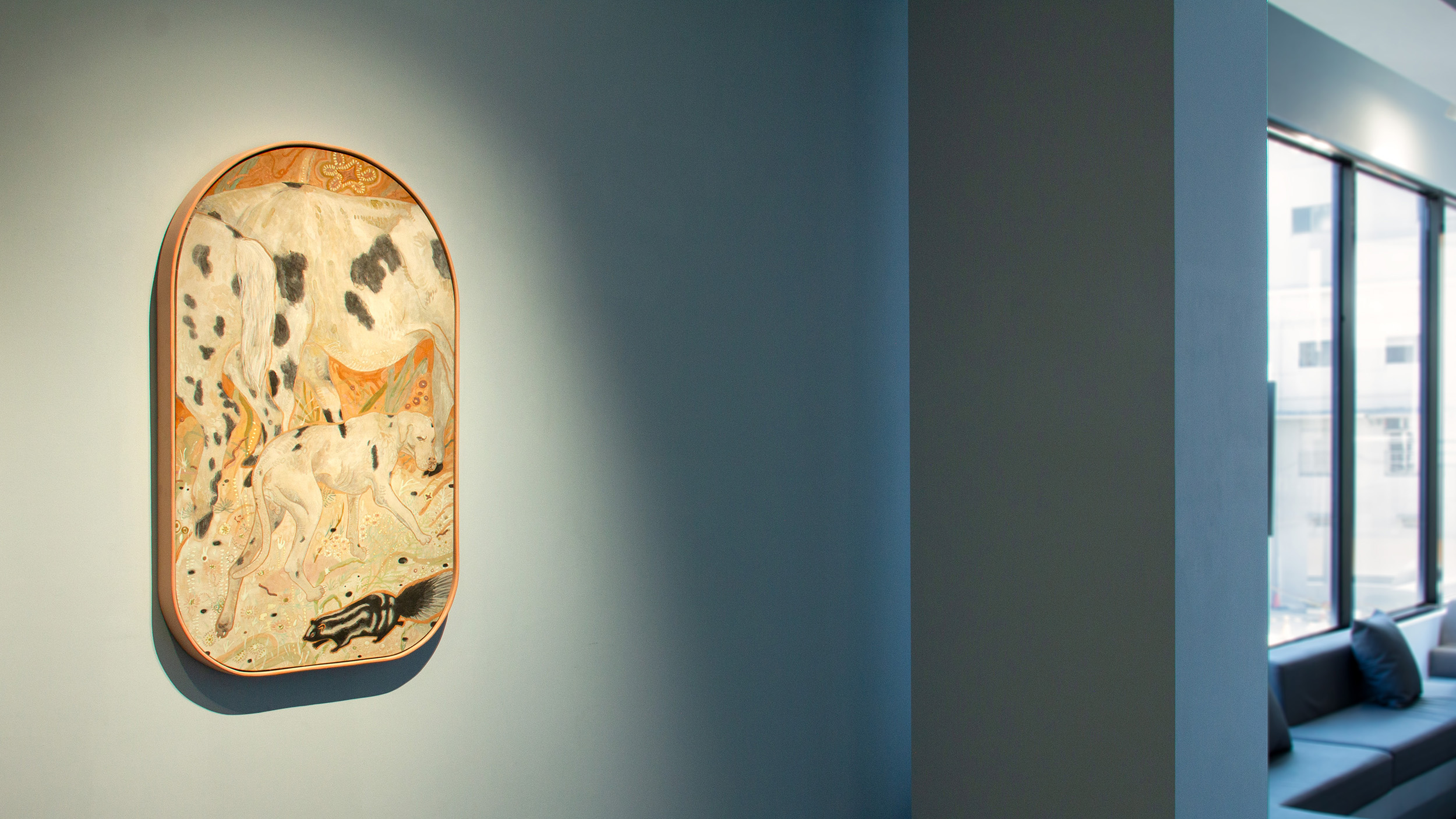
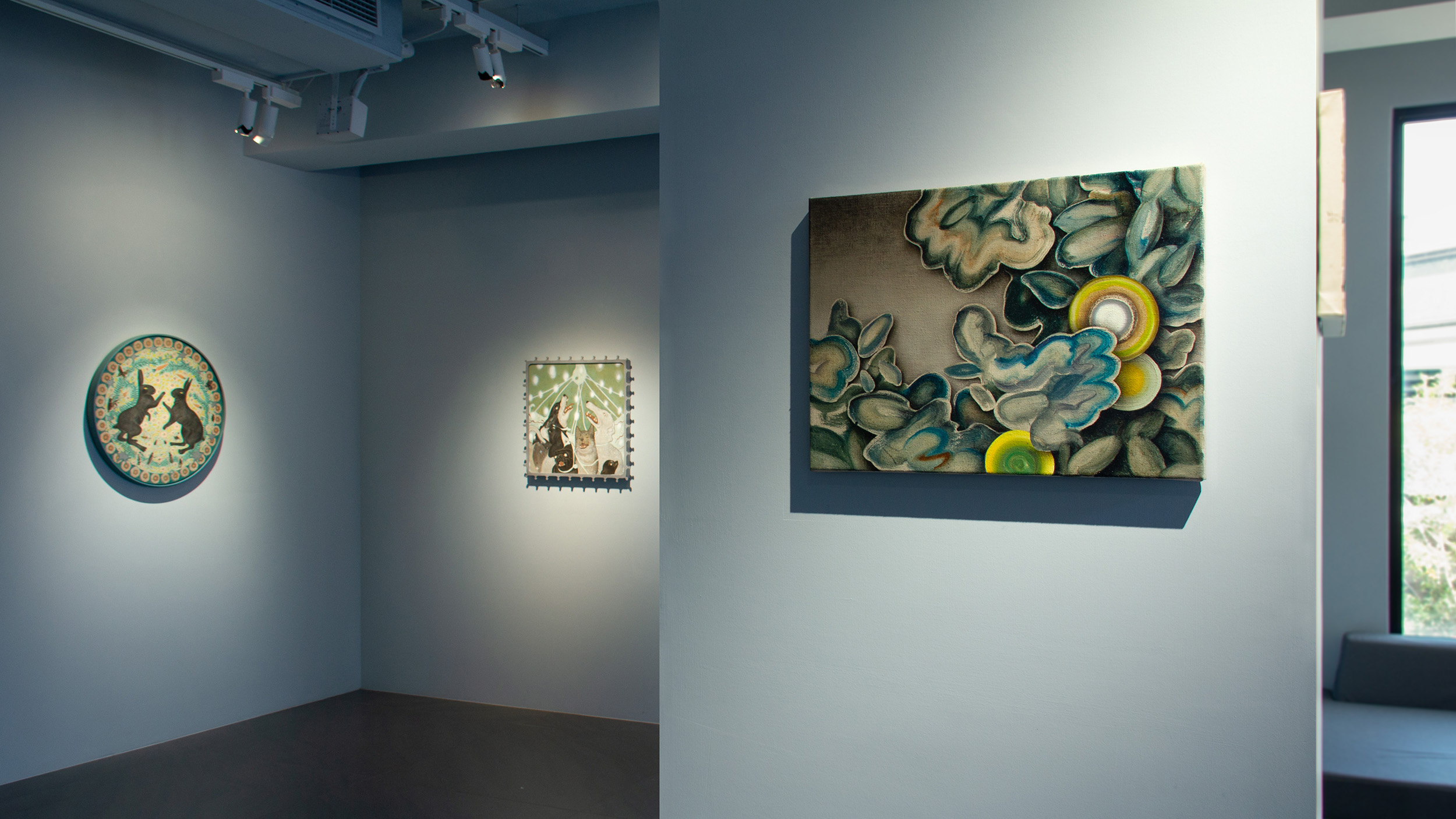
With their tiny, shining wings trembling, flying insects pursue fragrance. Following their innate instincts, beasts fight, roar, or crouch low in rest. Hong’s compositions convey a sense of serenity – still, yet quietly alive – like the quality of chamber music, a rondo that opens in a low voice.

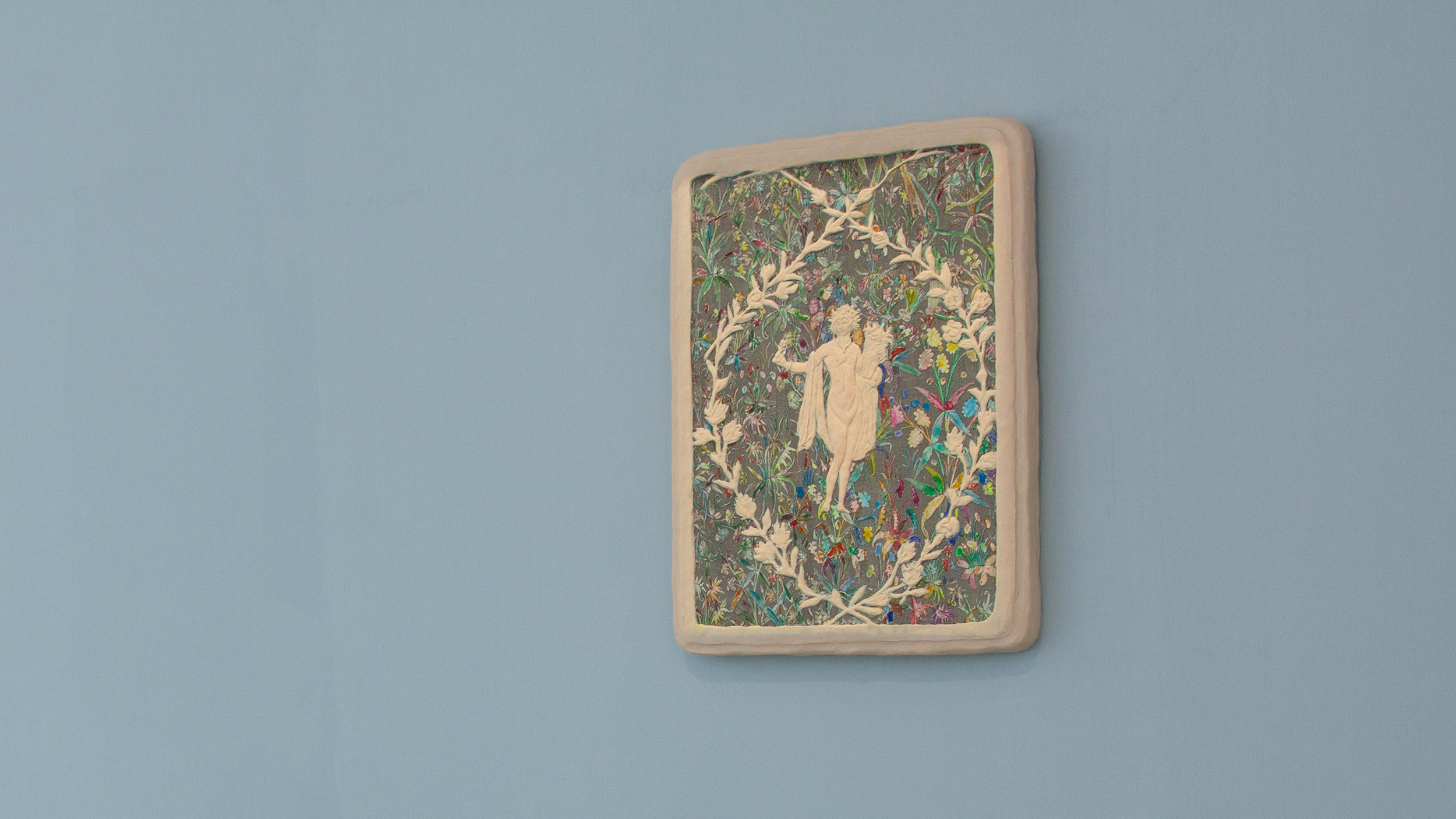
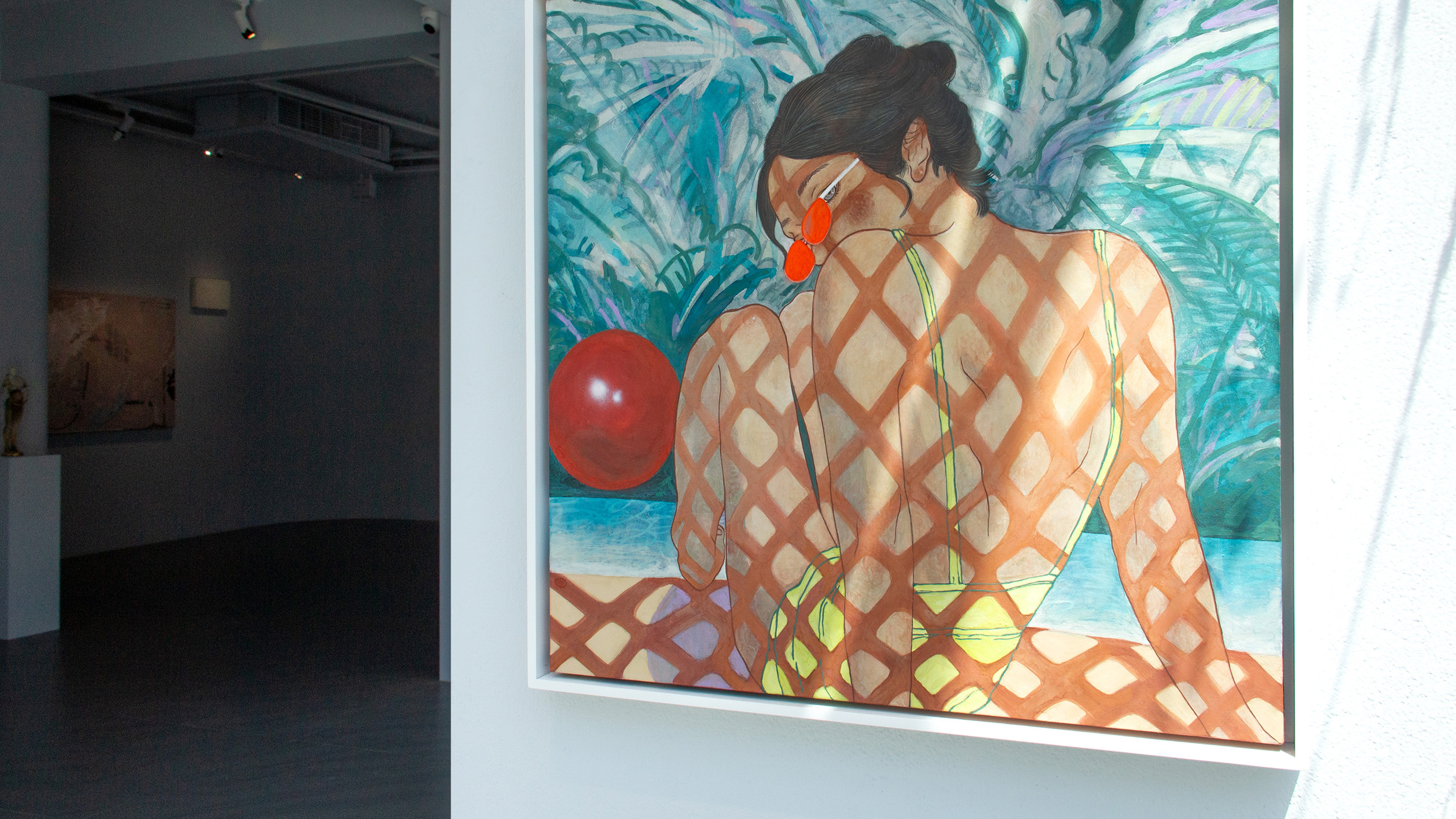
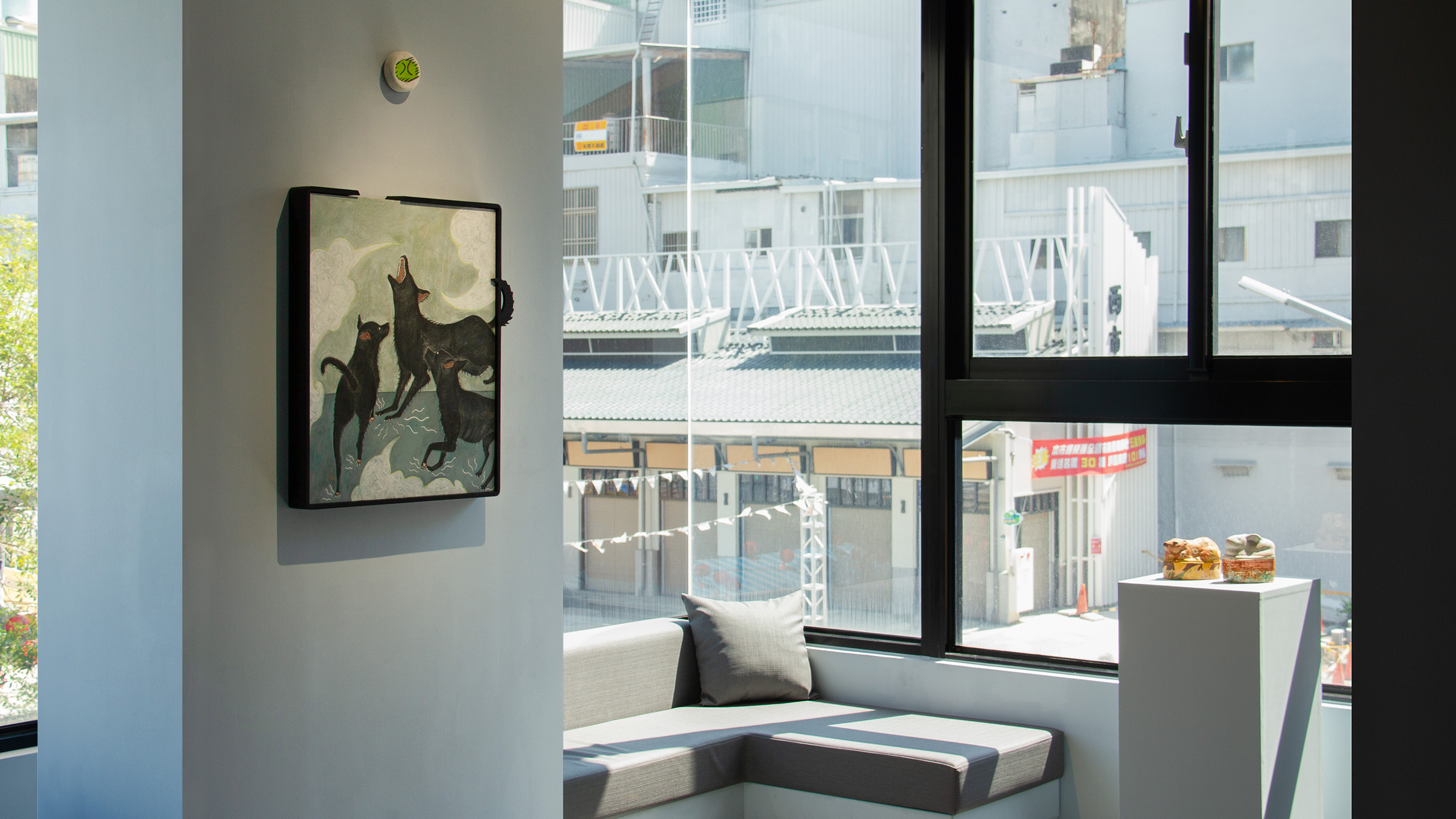
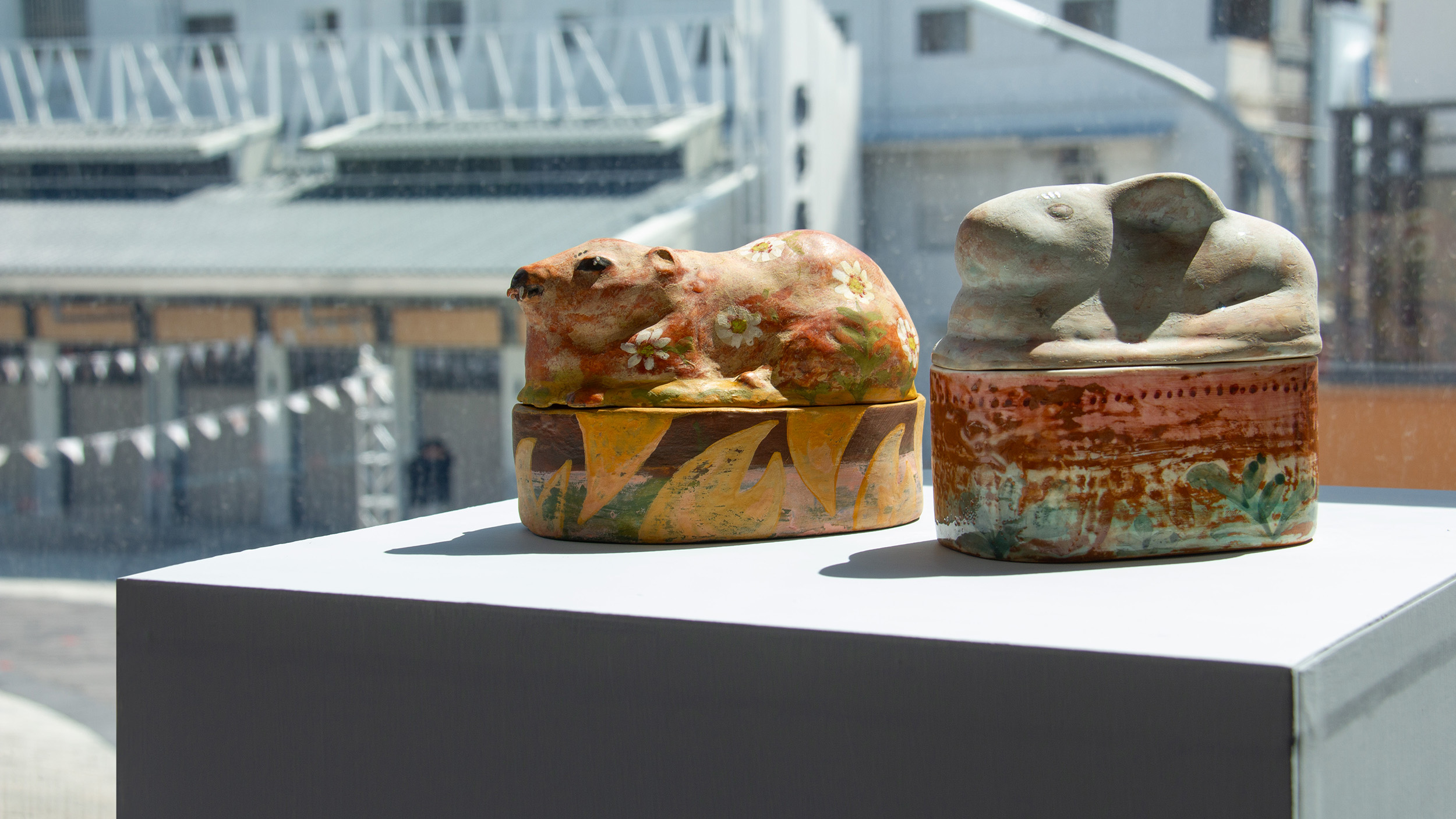
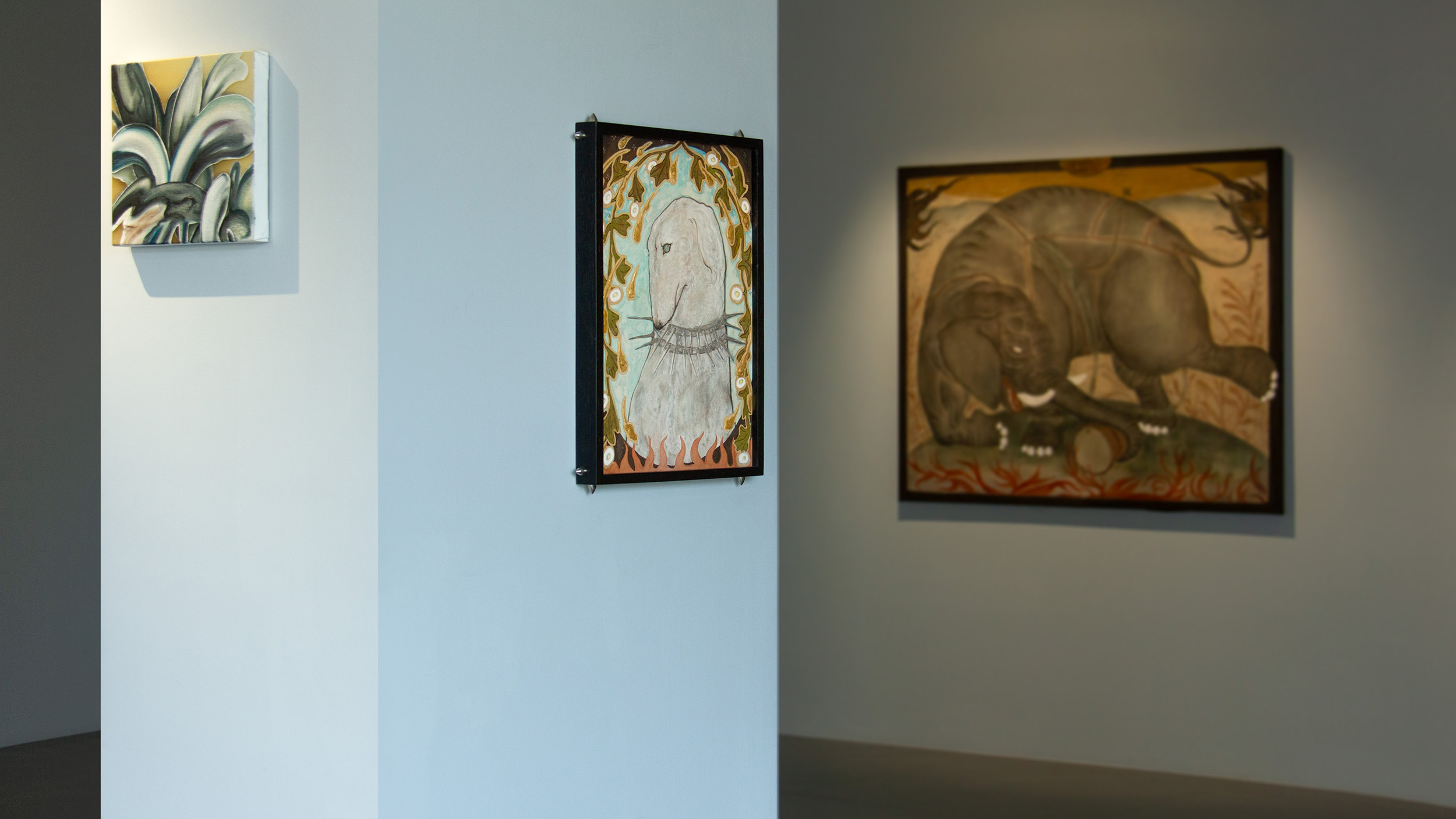
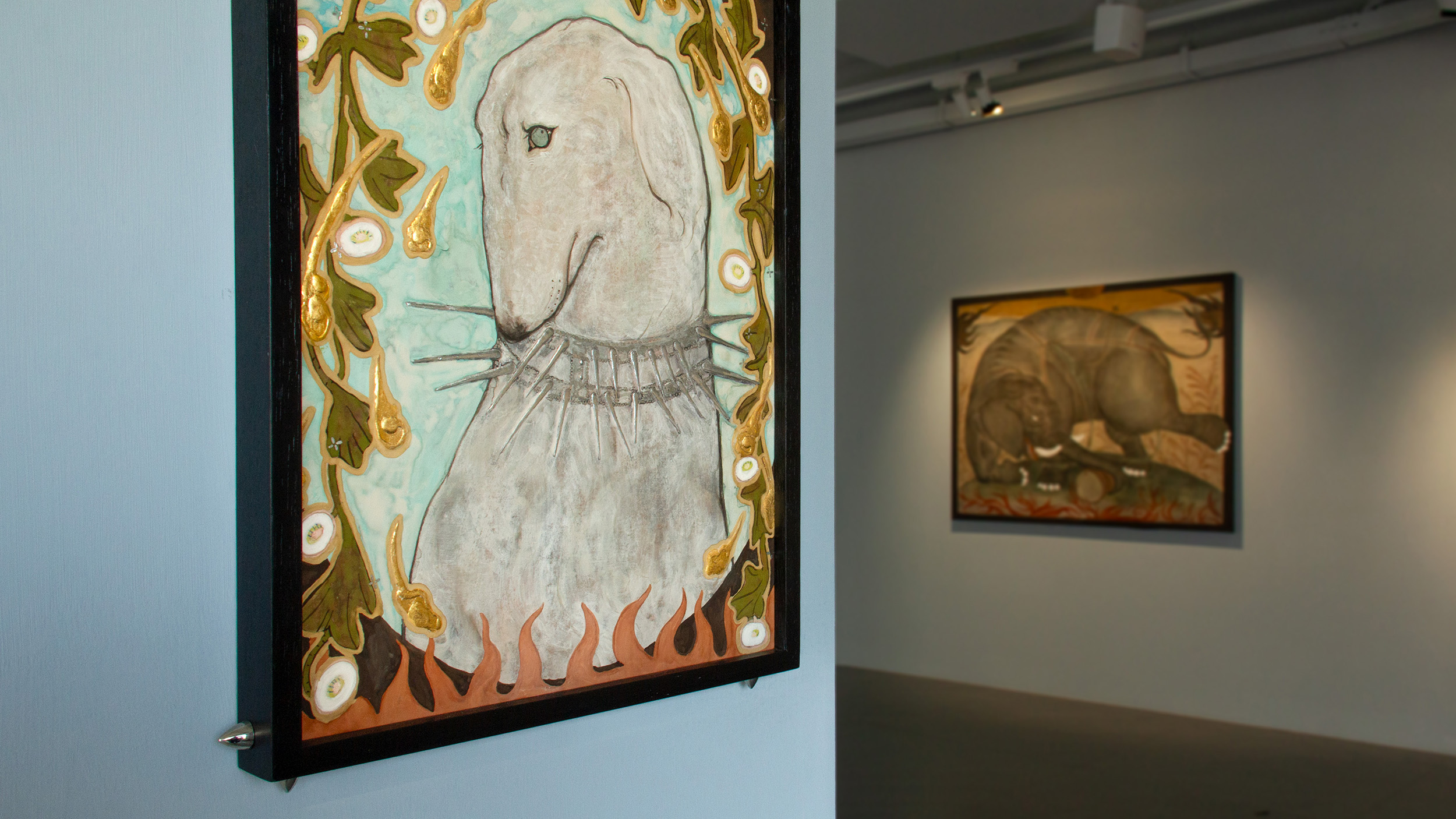
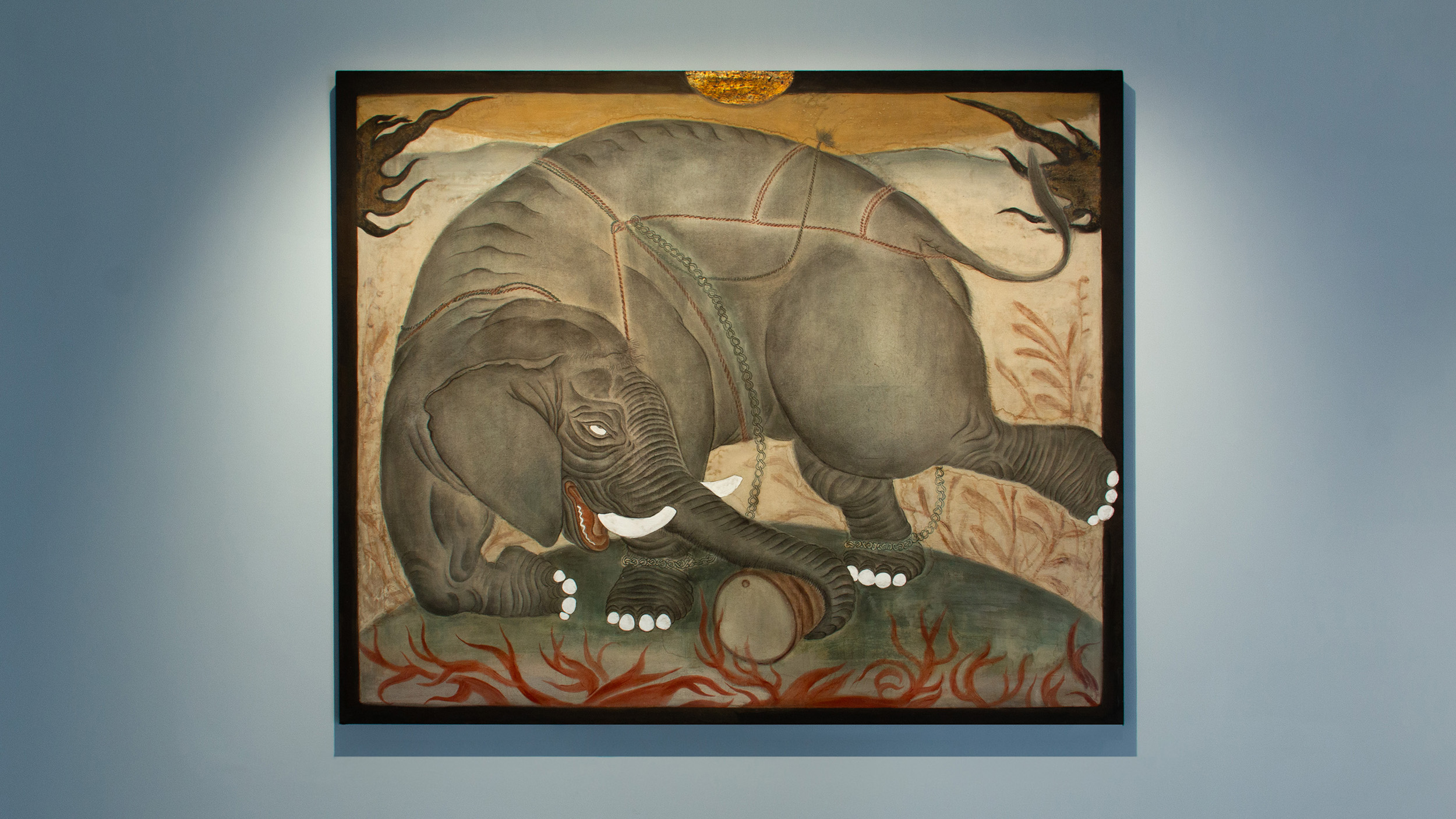
Entering her studio, one first encounters a calming African wooden mask hung upon the wall; totemic cloth drapes beside it. Greek black-figure pottery, the Pompeian frescoes of ancient Rome, medieval tapestries, and cave paintings of Dunhuang all nourishes her practice. Inheriting the tradition of Eastern calligraphy, Hong finds an unexpected commonality between the delicate precision of Gongbi brushwork and the intricate illustrations found in medieval manuscripts – through both she delineates the dramatic forms of animals and plants, while using decorative framing to introduce a ritualistic quality to the work. Hong’s artistic practice is interdisciplinary: drawing on ancient Western and Eastern cultures alike, she engages with the perspectives of Romanticism, geography, and museology, reinterpreting humanity’s enduring fascination with the natural world through the lens of contemporary cinema, literature, and other contemporary cultures.

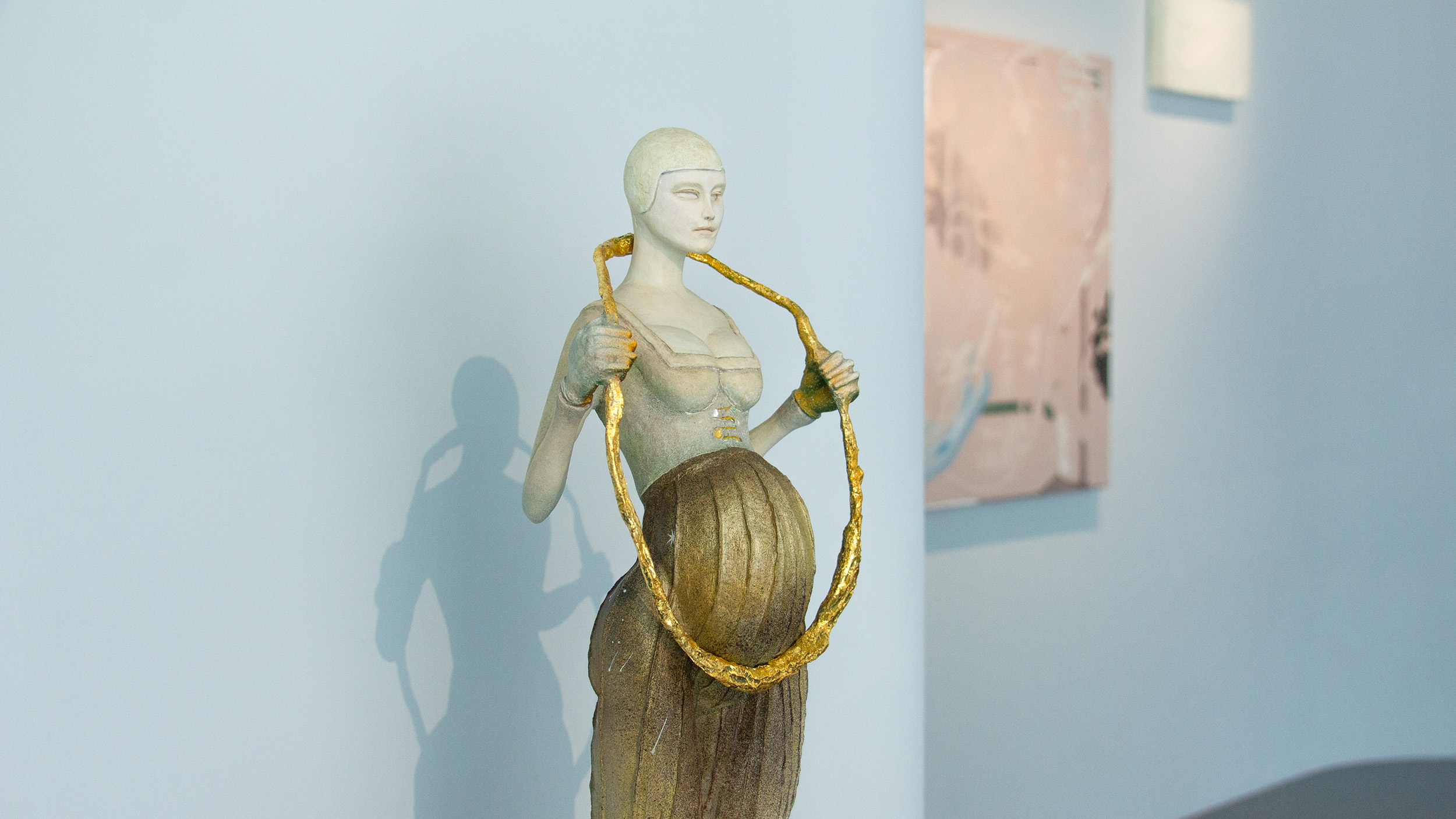
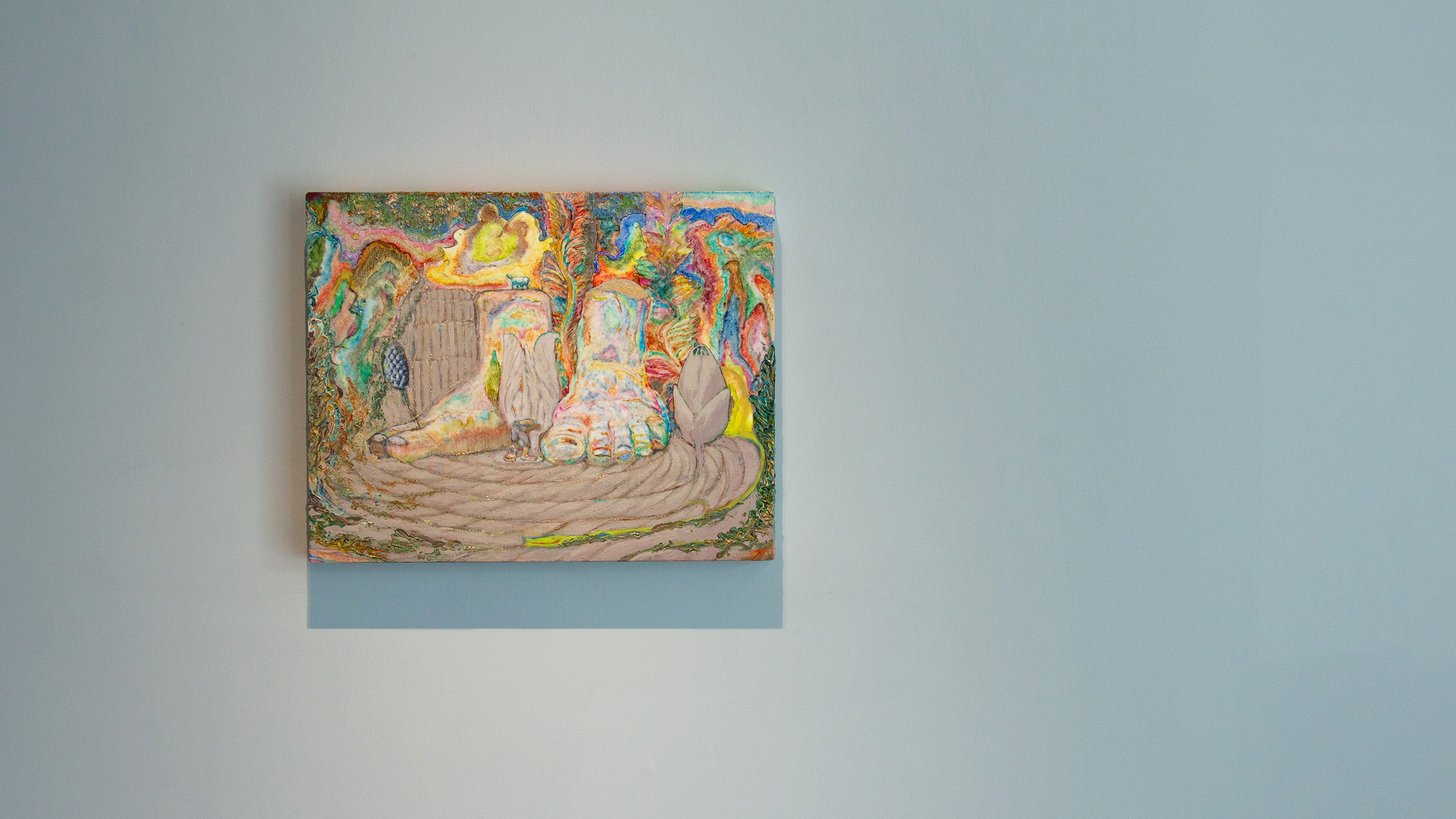
To replicate the mottled texture of ancient, unearthed artefacts, Hung works primarily in gouache, applying impasto to ground her paper with natural earth and mineral powders, and allowing the pigment to gradually penetrate the surface. Once washed away, the layered paint leaves behind residual traces – as though steeped in pigment for many years – before sanding and polishing reveal a lustrous, weathered sheen. Suspended between artificial intervention and natural transformation, an organic sense of time emerges. For Hong, archaism is a means of recovering a primal vitality long forgotten by humanity.

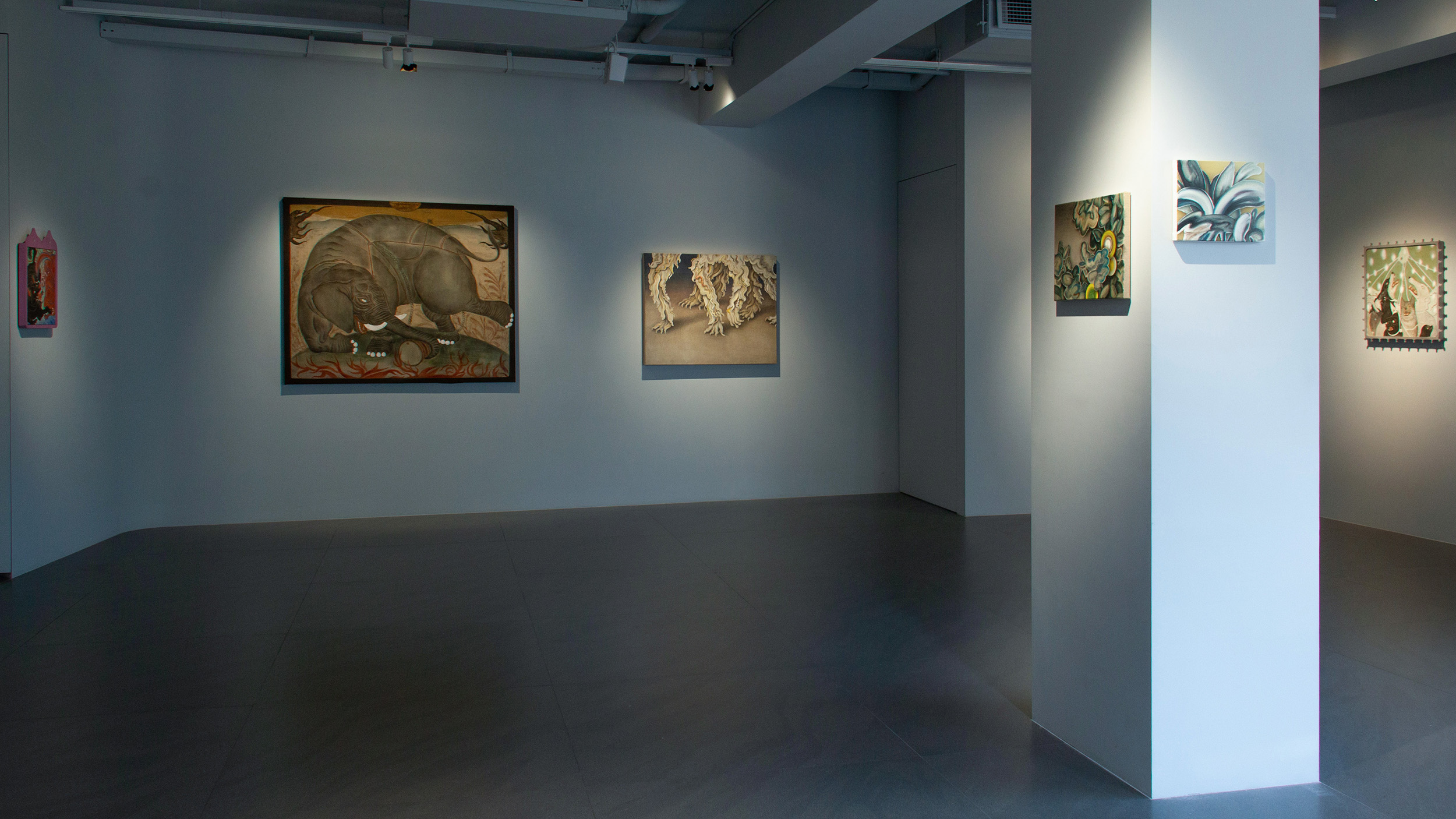
An Asian elephant with eyes half-closed, remains inwardly divine even when besieged by armies. With animals at the centre of her practice – from wild, religious murals chronicling hunting scenes to the tender, light-hearted pet portraits of the Renaissance – the artist traces the deep-seated fear and reverence humans have towards other living beings. Her animals, in turn, carry not only the weight of history’s many gazes, but the mark of her personal tenderness.
A clear wind rises. All things sound together.

If a symphony is a point of departure, each artist’s individual visual language resembles a distinct movement varying wildly in character: thunderously expansive, resonant, or quietly serene. Introduced through the lenses of astrology and chorography, WANG Ting-Yu’s polyphonic practice renders the vast universe from a macro perspective. CHENG Nung-Hsuan’s vivacious yet latent rondo reveals how ambiguous narratives seep into the theatre of the world, apprehended from a mid-range vantage. Like fabled animals murmuring low, HONG Yong-Xin directs our gaze inward to the micro, exploring the divinity and fragility of life’s most primal forms.

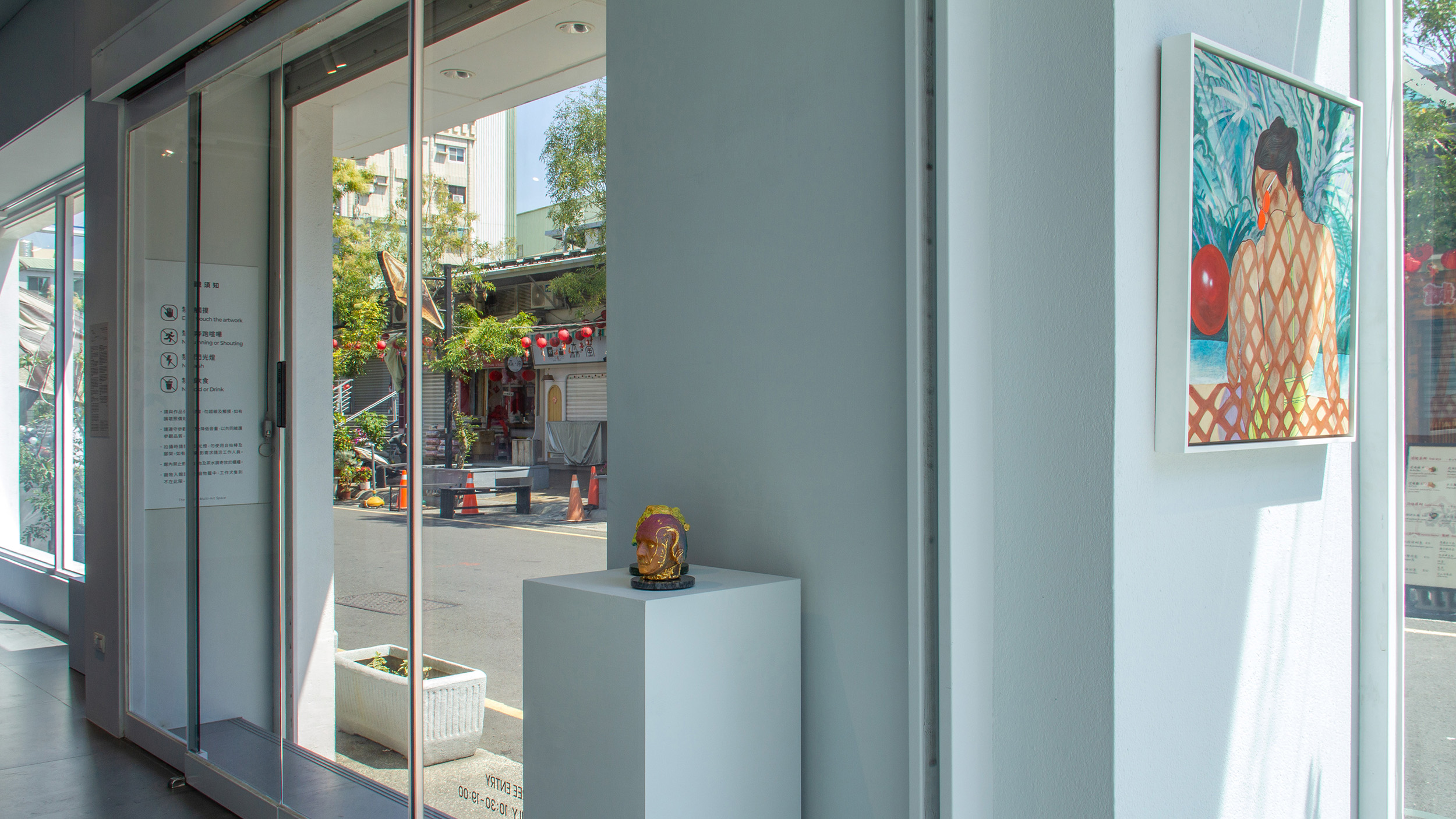
As viewers pause before the works, they not only inhabit the three artists’ perspectives, but find themselves hear something – as though synaesthesia were at play – wherein lines and colour planes generate their own rhythms and resonances, and time itself becomes something one can observe. Ultimately, under the guidance of Gou-mang and Persephone, between the ancient and the contemporary, between Eastern and Western realms, and between humanity and all other living beings – the exhibited works converge into a spring symphony of mythology, time, and the natural world.
1 Gou-mang: The God of Spring and Wood in ancient Chinese mythology. Descriptions in the Classic of Mountains and Seas depict him with ‘the body of a bird and the face of a man, riding two dragons,’ a mystical hybrid form. Later texts state: ‘The East corresponds to Wood; its sovereign is Emperor Taihao, with Gou-mang as his assistant. They hold the governing order and preside over the spring.’ This affirms Gou-mang’s role in overseeing the growth of all living things in spring in Eastern culture.
2 Persephone: The goddess of Spring in the Theogony by the Greek poet Hesiod, daughter of Demeter, the Goddess of Harvest, and Zeus. Abducted by Hades and taken to the Underworld, her journey became a metaphor for the seasons: her return to the earth each spring and summer brings life and bloom, while her descent in autumn and winter leaves the land in dormant silence and all crops wither.
3 Alexander von Humboldt, a nineteenth-century Prussian naturalist, explorer, and thinker, is widely regarded as one of the key foundational figures of modern natural science and geography. His seminal work, Kosmos, seeks to articulate—through both scientific discourse and poetic language—the inherent beauty of the interconnected order of the universe.
4 Michel Serres, trans. Chen Tai-yi, *Michel Serres’ Pan-Topia* (Taipei: Rye Field Publishing, 2019), p. 154.
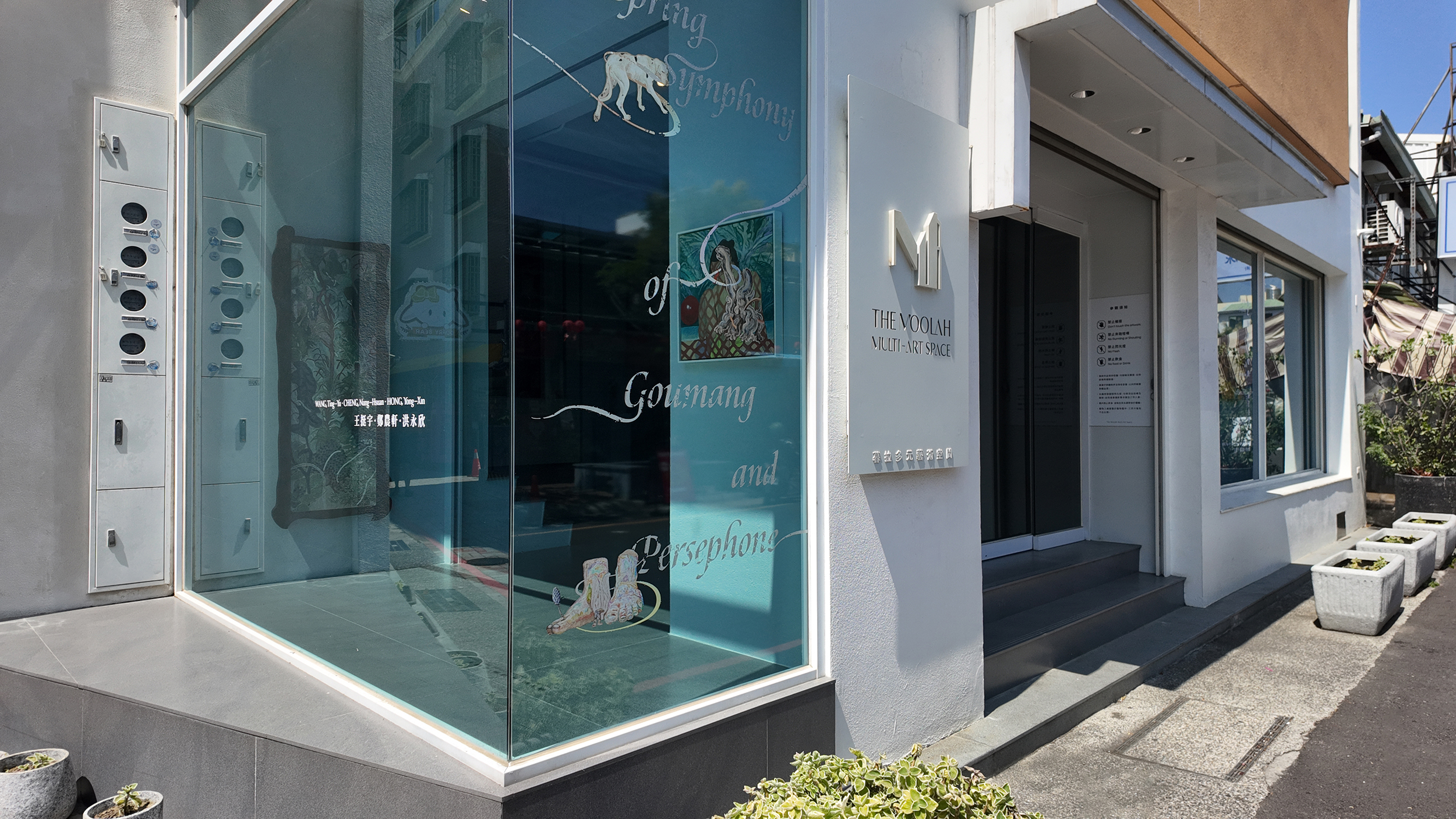
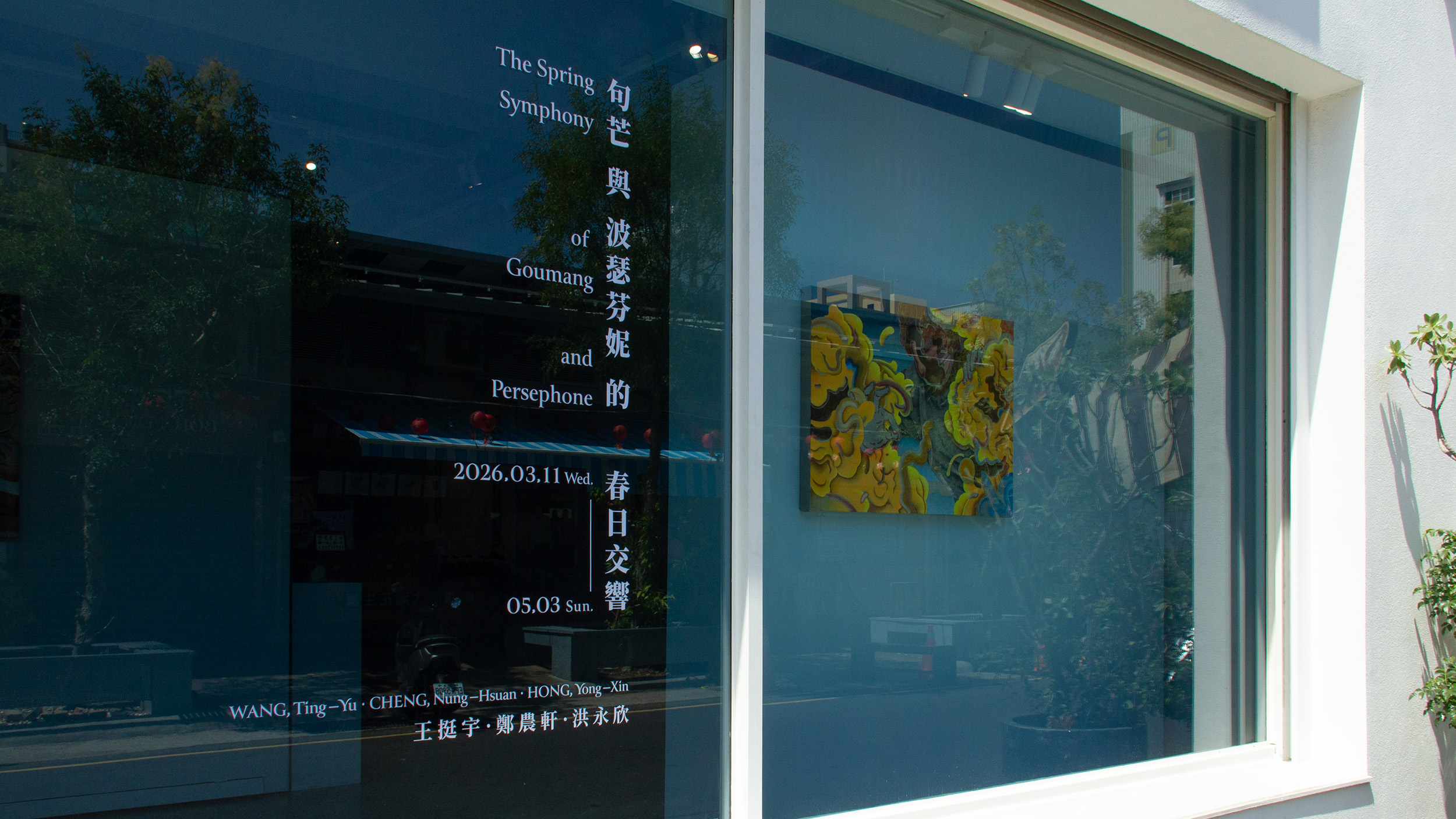
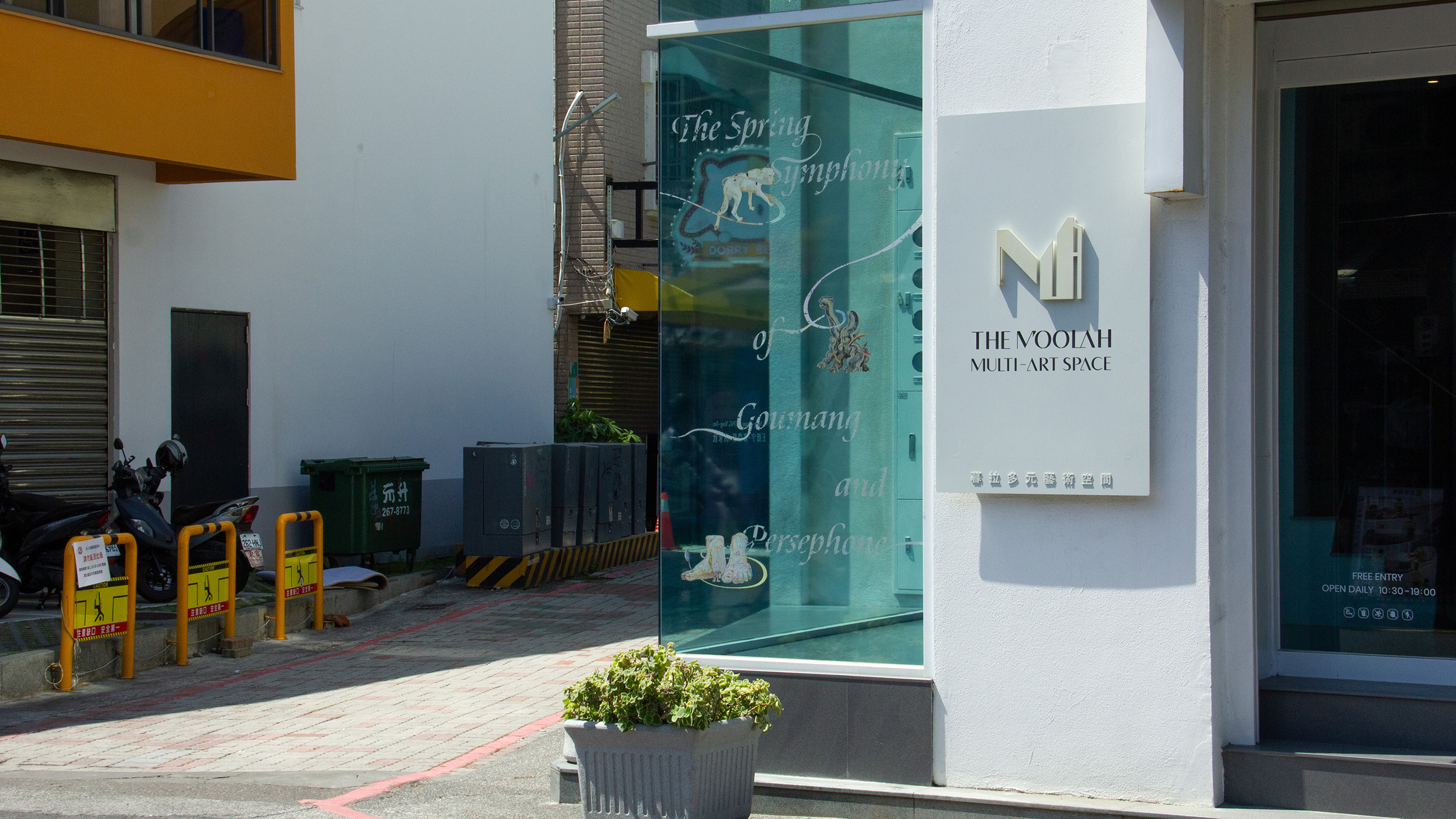
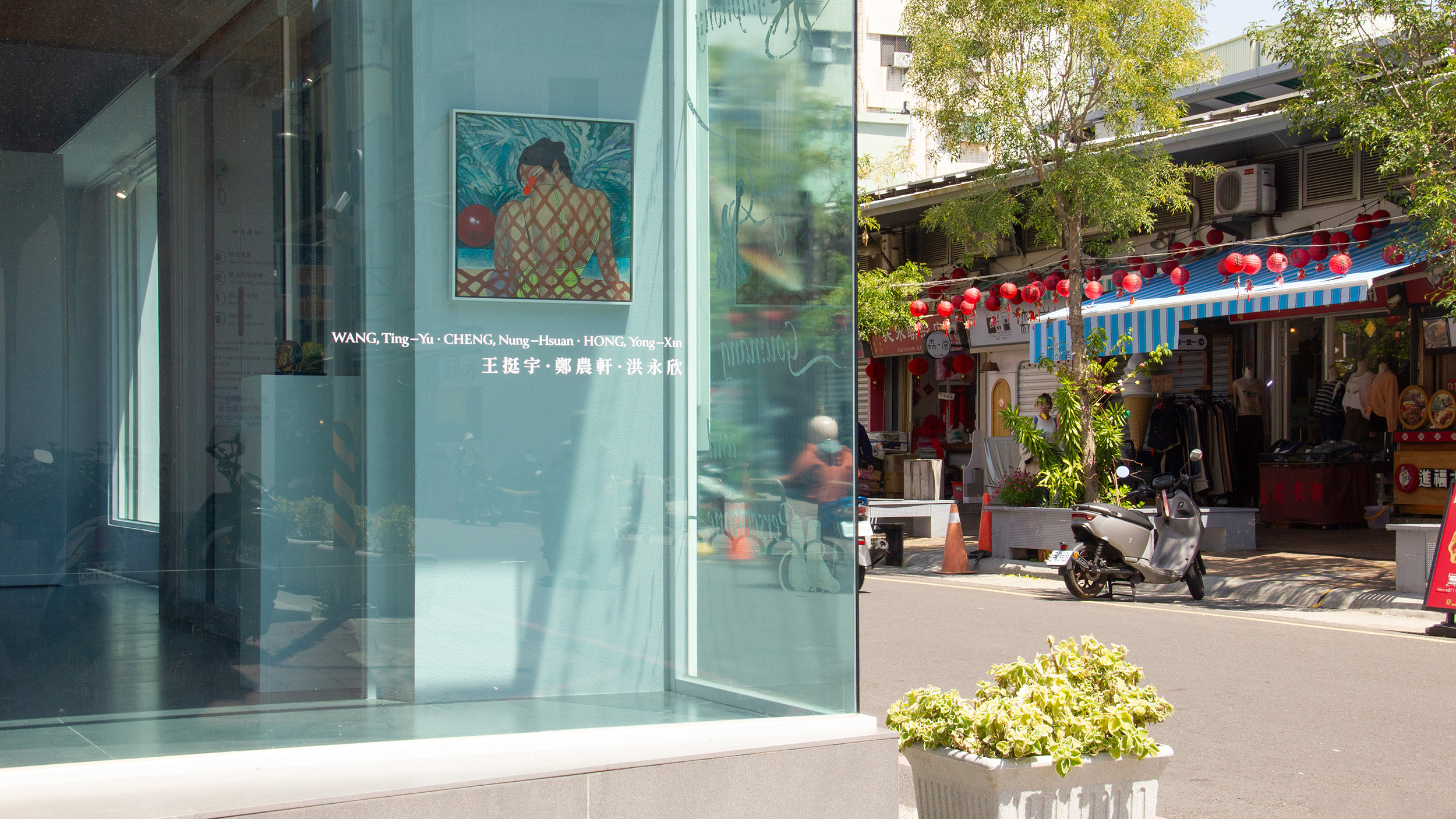
𝐓𝐡𝐞 𝐒𝐩𝐫𝐢𝐧𝐠 𝐒𝐲𝐦𝐩𝐡𝐨𝐧𝐲 𝐨𝐟 𝐆𝐨𝐮𝐦𝐚𝐧𝐠 𝐚𝐧𝐝 𝐏𝐞𝐫𝐬𝐞𝐩𝐡𝐨𝐧𝐞|𝗔𝗿𝘁𝗶𝘀𝘁𝘀 WANG, Ting-Yu / CHENG, Nung-Hsuan / HONG, Yong-Xin|𝗗𝗮𝘁𝗲 Mar 11 – May 3, 2026|10:30 – 19:00 (Mon. – Sun.)|𝗩𝗲𝗻𝘂𝗲 The Moolah Multi – Art Space|𝗔𝗱𝗱𝗿. No.15, Sec. 3, Guohua St., West Central Dist.,Tainan City 700, Taiwan (R.O.C.)