




View more


The Everyday, Afloat
When the Everyday Exceeds Itself
Text / Huang Chien-Hua
“Next time is next time. Now is now.”
—Perfect Days (2023), directed by Wim Wenders
Some things are difficult to see not because they are far away, but because they are too close to us.

The street we pass every day, a leaf that keeps appearing, a symbol so familiar it is almost transparent, or the relationships between people and things to which we have long grown accustomed. These things have not disappeared; they have simply, day after day, gradually become the background of life. The days seem the same, yet each time we pass by, each time we pause, each time we encounter things anew, subtle differences invariably arise. But these differences are too small, too slow, and too close to life itself for them to be recognized in time.

Perhaps what is interesting about the everyday lies precisely in these barely perceptible changes.

The French writer Georges Perec once turned his gaze to the spaces that constitute daily life, attempting to start from those things right before us that are most familiar and most easily overlooked. In his Species of Spaces, he does not understand space as an abstract, homogeneous container; he unfolds outward from the page, the bed, the room, the dwelling, the street, and the city, allowing space to reveal layer upon layer, each open to observation, description, and recognition. And these seemingly stable structures are, in fact, full of gaps, turns, boundaries, and joints. For Perec, the question worth pursuing is not how to invent new spaces, but how to pay renewed attention to the things and relationships in which we already find ourselves, yet which have gradually slipped from our awareness through habit.

This way of looking opens up our understanding of the "everyday." The everyday is not a blank, nor is it a lack of events; it is formed through the accumulation of countless small differences, shifts in position, repetitions, and relationships. But when everything is too familiar, perception is gradually diluted through prolonged reiteration, and the things before our eyes become, paradoxically, harder to notice. To read space, then, is to do more than see a place: it is to recognize those relationships that have long existed, yet have been covered over by daily life.

"The everyday, afloat" unfolds from here.

It does not point toward another world removed from reality. It is a subtle disturbance occurring within reality itself. Things that have sunk into habit, function, and established meaning float back to the surface once again through a shift in how we look at them. Forms have not changed their identity, nor have things left their original positions, yet their relationships with the surrounding world have already begun to loosen. The familiar, therefore, is no longer simply taken for granted; it becomes a state that can still be opened up and shifted, and that continues to generate difference.

Difference does not usually appear suddenly; it takes shape gradually over time. The habitual is not fixed and immobile; as experiences accumulate, one after another, it reveals different aspects of itself through subtle gradation. A form is recognized anew, a relationship shifts in distance, a gap appears in an established order. The everyday thus continually drifts from its original contours, becoming a slightly different version of itself.

What is called "exceed," then, does not mean moving from daily life toward the anomalous, nor replacing the familiar with the strange; it means that things reveal aspects previously unnoticed while remaining themselves. A thing is still what it is, yet no longer corresponds solely to our understanding of it. Such changes do not proceed in a single direction: sometimes they involve detachment, sometimes accumulation; at times they displace a relationship, and at others they allow different things to meet anew. Here, the everyday is not left behind; through different ways of looking, it reveals possibilities that can still be unfolded.

For Suzuki Yuya, the city has never been merely scenery: it is a system that continually leaves traces. The remnants and in-between zones situated between public and private, artificial and natural, use and abandonment—these he detaches from their existing contexts, transforming them into forms resembling symbols. Fractures, seams, displacements, and accumulations thus constitute another layer of urban structure. As these appearances are recoded, they gradually disengage from any reference to a single object or site, entering a state between recognition and the unknown. What Suzuki reconstructs is not another city, but the orders that have always existed within it, but have not yet truly been perceived.

Kamijo Fumiho, meanwhile, discerns time in the midst of repetition. He fashions similar natural forms from wood, using carving, coloring, and the touch of his hand so that each work preserves, within its similarity, an irreplaceable subtle variation. Light, wind, the seasons, and memory are not depicted directly; along with the grain of the material, the undulations of form, and sustained labor, they gradually sink into the object. The leaf is not depleted of meaning through repeated appearance; instead, it gradually exceeds its established image with each act of sculpting, becoming a testimony to time and life, and making nature itself a measure against which time leaves its traces. These recurring forms continually remind us that nothing can ever truly happen again in exactly the same way.

In Tsao Chang-Hung's paintings, what most deserves attention in reality is often the very moment when it begins to deviate from itself. He draws images from scenes of daily life, established symbols, and bodily experience, yet does not allow them to remain in their original positions or meanings. When the relationships among symbols, bodies, and scenes of daily life change, the once-clear references begin to slip. Painting thus opens a gap between reality and psychological projection: things have not changed their identity, yet perception can no longer recover its former stability. What Tsao engages with is not how the unfamiliar is produced; it is how, through the slightest displacements, the familiar once again reveals the uncertainty that habit had concealed.

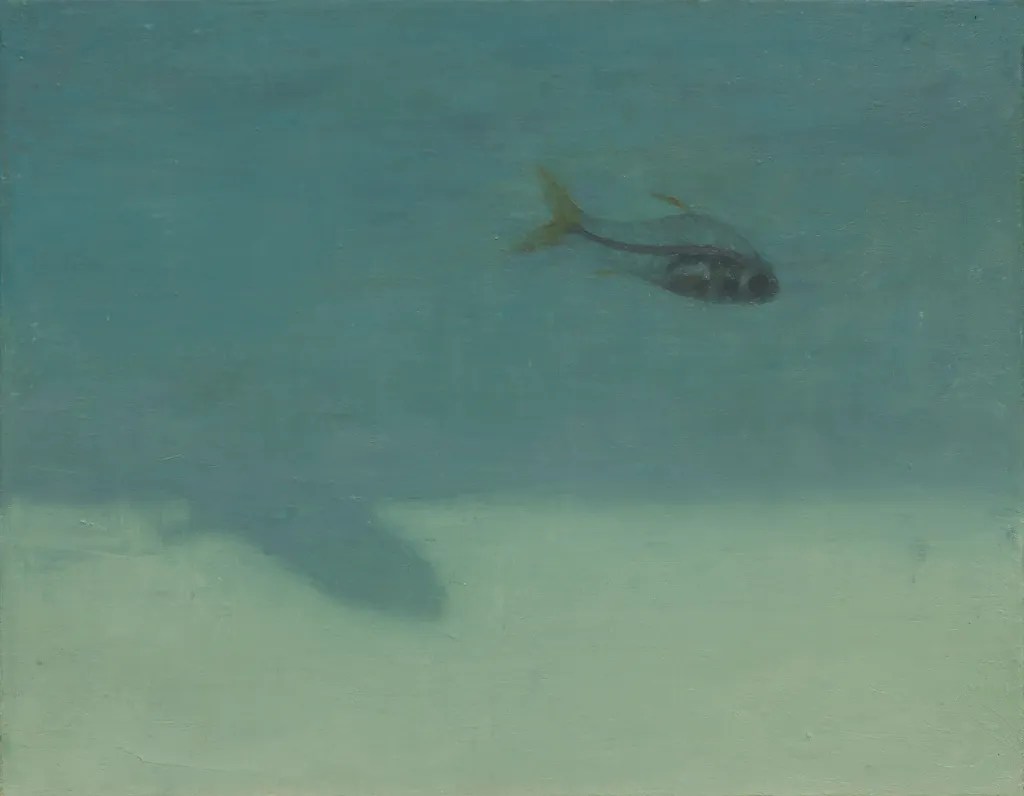
What Mateo Cabrera rearranges is never merely things themselves, but the very ways the world comes to be understood. Figures, animals, plants, and objects retain their recognizable forms, yet, once recombined, enter a world that is at once familiar and difficult to fully make sense of. Rather than attempting to depict another world, he temporarily loosens established classifications, making "how we know the world" itself unstable. When known things enter new relationships, recognition no longer equals understanding, and looking wavers between familiarity and doubt. Reality here ceases to be a closed order and becomes an open structure that can still be reorganized.

The artists do not collectively depict any single form of daily life, nor do they seek to replace the everyday with the anomalous. They simply loosen the established world from different positions detaching a form, accumulating differences through repetition, slightly displacing relationships, or letting things that were once separate meet anew. These changes, which are not drastic, keep meaning from fitting entirely into its original place, and also allow overlooked relationships to gradually surface.

"Exceed," therefore, is not a departure; it is more like an edge that extends slightly beyond an established contour. We remain within the everyday, yet begin to realize that things are always more than our existing understanding of them. It is precisely in this slight excess that the things before us regain the possibility of being viewed. The everyday has not disappeared; it is simply no longer merely the background of life, but once again a present that can still be opened up.
𝐓𝐡𝐞 𝐄𝐯𝐞𝐫𝐲𝐝𝐚𝐲, 𝐀𝐟𝐥𝐨𝐚𝐭
𝐖𝐡𝐞𝐧 𝐭𝐡𝐞 𝐄𝐯𝐞𝐫𝐲𝐝𝐚𝐲 𝐄𝐱𝐜𝐞𝐞𝐝𝐬 𝐈𝐭𝐬𝐞𝐥𝐟
Artists  Mateo Cabrera / KAMIJO Fumiho / SUZUKI Yuya / TSAO, Chang-Hung
Dates       Oct. 7 – Nov. 29, 2026   10:30 – 19:00 (Mon. – Sun.)
Venue      The Moolah Multi-Art Space.No.15, Sec. 3, Guohua St., West Central Dist., Tainan City 700 , Taiwan

Mateo Cabrera

KAMIJO Fumiho

SUZUKI Yuya
